- No.
- G-0217
- Fam.
- Cactaceae
- Loc.
- Kutaisi, Imereti
- Leg.
- Revaz Gogoladze, locksmith, April 1999
G-0217GlasshouseCactaceae
Fourth-Cone Mammillaria
Mammillaria griseiflora
Under cultivationA Kutaisi windowsill cactus flowers grey to every human eye and bright to every spectrometer, and one unclaimed exam answer names the colour.
- Collected at
- Kutaisi, Imereti
- Date
- April 1999
- Collector
- Revaz Gogoladze, locksmith
- Anomalies
- Non-standard basesLinguisticTemporal
Sequenced fragment
ATGGCTTCAAAGGAAGTTCTTGAGAAGCATCCTCTTGGCACGTGCAGTTTCCAGGATACTTCGTCAATGGACCACTCACCAAGAG
Contents 6 sections
Description
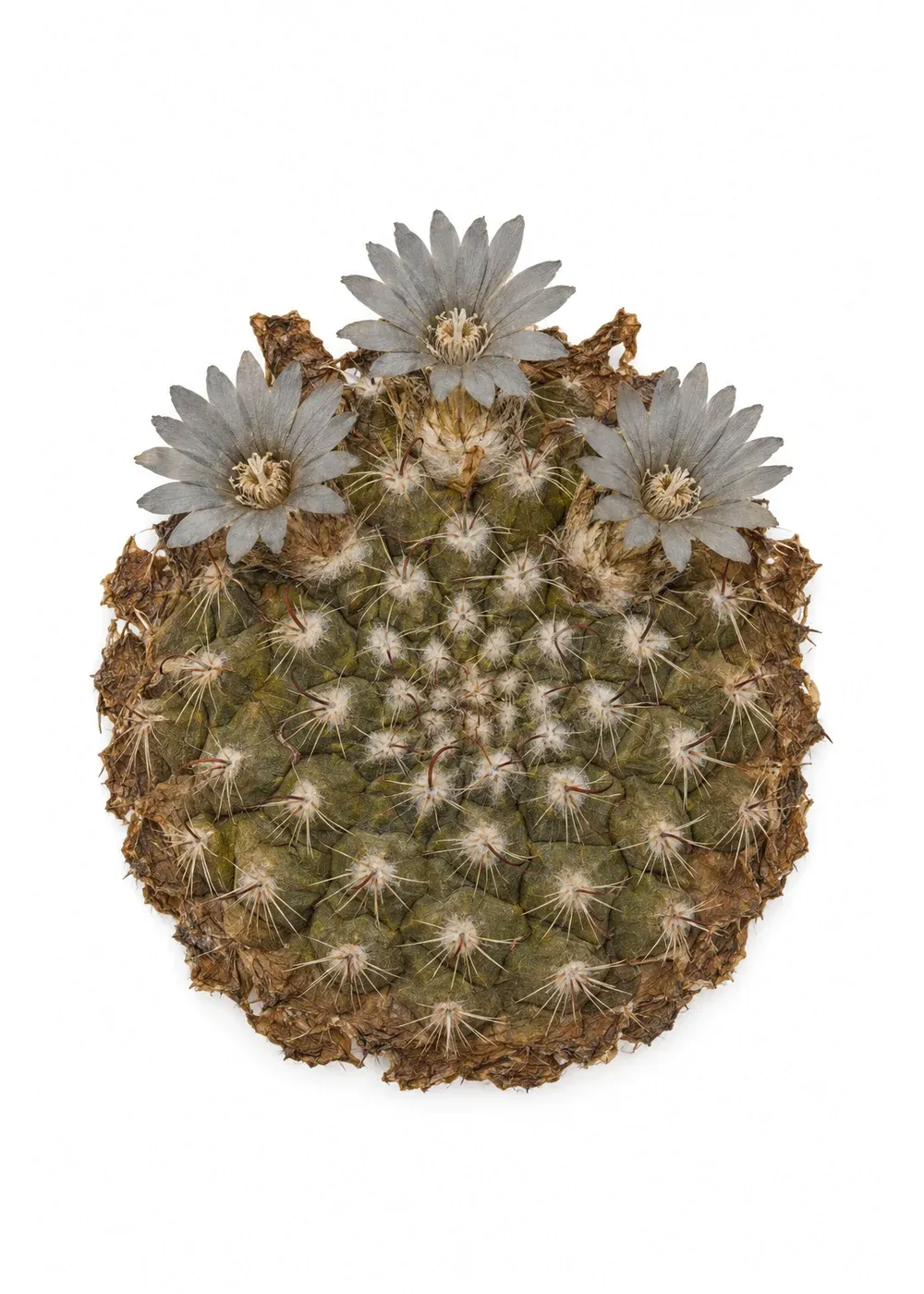
A solitary globose cactus, 7 cm across and 6 cm tall, in a 10 cm clay pot. The stem is dark green and covered in conical tubercles arranged in intersecting spirals of 8 and 13, with white wool in the axils. Each areole bears 20–24 fine white radial spines, 5 mm long, and one or two hooked central spines, reddish-brown. Flowers are borne in a ring around the crown in late winter. They are funnel-shaped, 14 mm across, with narrow lanceolate perianth segments, and are followed by club-shaped red fruits.
Observations
Every person who has seen the flower calls it grey. Every instrument that has measured it records something else. Nothing else about the plant is unusual.
To the eye
In 2019, 214 visitors were asked the colour and all 214 said grey. The sample included four people with red–green colour deficiency and one woman known to carry a fourth working cone type. Film and digital photographs both show grey. The nearest match by eye is a photographer’s 18% grey card, and the match is exact.
To the spectrometer
Reflectance is flat at 18% from 400 to 700 nm. There is one clean peak, centred at 1,452 nm, 4 nm wide, reaching 63%. That wavelength falls inside a water absorption band, where living tissue should reflect almost nothing. The peak appears as each flower opens and is gone within forty minutes of it closing. No pigment accounts for it, and neither does surface structure: electron microscopy in 2020 showed ordinary conical epidermal cells.
The watch
Accessioned with the plant is a silver open-face pocket watch. In 1995 the collector lacquered its dial with a fallen flower ground into shellac. The dial gives the same peak, undiminished. The hands stand at 11:52. The movement is sound and fully wound. It does not run.
The file
Received in April 1999 from Revaz Gogoladze, locksmith, together with the plant, the watch, his workshop copybook and answer sheet 31, which Nino Beridze gave him “because it belongs with the flower”. The documents are filed in the order he handed them over, and the translations are the Conservatory’s. Field 9 of the accession card, Colour of flower as recorded, was left blank until we could decide between the observers and the instrument. At the audit of March 2016 it was found filled in, in the seven characters of sheet 31. The card is kept in Cabinet 4. Mr Gogoladze made its lock himself and posted it from Kutaisi with two keys. I hold both. — M. Ostler, Registrar
Song of the grey flower
Folk song made in a Kutaisi workshop, translated from Revaz Gogoladze’s copybook with his notes — filed by M. Ostler, registrar
First verse
The current went out on Tsereteli Street, / the kettle went cold on the stove, / and up on the sill among the keys / the green stone put out a grey flower.
R.G.: This was the third winter without proper current. People sat in my workshop because I had a paraffin lamp. Valiko Kapanadze, a tram driver, made this verse. There were no trams. The stone is the cactus. My mother bought it at the Green Bazaar in 1986 and kept it over the radiator, and it never flowered for her. It flowered the first winter my workshop was cold.
Chorus
Grey, grey, it isn’t grey, / says the man from the university. / Grey, grey, we see it grey, / and nobody here is lying.
R.G.: The man is Tamaz Lomidze, physics. In February 1997 he pulled his instrument up my stairs on a sledge and ran it off a lorry battery. He said the flower is very bright, in a place we have no door for. The chorus was the neighbours’ answer. He sings it as well.
Second verse
I lent my watch to the teacher, / for the school clock runs on the wire. / It stopped at eight minutes to noon / and the children went on writing.
R.G.: It was my father’s watch. In 1995 a flower dropped, and I ground it into shellac and painted the dial with it, to keep one. Everyone says the dial is grey. Nino Beridze borrowed the plant and the watch for the ninth-class examination at School No. 14. The watch came back stopped.
A verse nobody sings now
Thirty went in at the school door / and thirty came out at the bell, / and thirty-one papers lay on her desk / and one of them knew the name.
R.G.: Nobody has sung this since the commission, because Nino cried in their corridor and people here are kind. I write it down because it was true.
Ninth class biology, practical paper
End-of-year examination, Kutaisi School No. 14, answer sheet 31 (no candidate of that number) — set and marked by N. Beridze, biology teacher
Answer all questions. The specimen is on the front desk; come up one at a time to look at it. Time allowed: 50 minutes by the clock on the front desk.
[Registrar: school stationery, numbered in red in Mrs Beridze’s style of numbering. She denies writing it. There is no name on the sheet.]
Question 1 (5 marks)
Name the family to which the specimen belongs.
“Cactaceae, the cacti.” — 5/5
Question 2 (15 marks)
The human eye has three types of cone cell. Use this to explain why we see the flower as we do.
“The flower is very bright in one place only. None of the three kinds of cone reaches that place, so the eye only gets the dull light from everywhere else and reports grey. This is not a mistake. The eye is saying honestly what it has.” — 15/15
Question 3 (10 marks)
State the colour of the flower.
[Seven joined characters, written the way Mkhedruli is. The last four are ფერი, “-colour”, as in ცისფერი, sky-colour, or ვარდისფერი, rose-colour. The first three belong to no Georgian script, and to none of the 140 other scripts we have compared them with.] — 10/10, provisional. N.B.
Examiner’s report
Thirty candidates were registered, thirty were present, and thirty-one scripts were collected. On question 3, twenty-eight wrote ნაცრისფერი, grey; one wrote silver; one left it blank. I set the question after Mr Lomidze’s visit, to see whether anyone would write something other than what they saw. Script 31 is in a hand I do not know. Its marks are held until it is claimed. — N. Beridze
[Registrar: the other thirty scripts went back to the school in 2001, at its request. Nobody asked for script 31.]
Small advertisements, Evening Kutaisi
Cuttings from a Kutaisi evening paper with their outcomes, pasted into the copybook by R. Gogoladze and annotated by the registrar
Notice — To the pupil who handed in sheet 31
Ninth class, School No. 14, biology. Your marks are kept for you in the staff room. Ask for Nino Beridze. You are not in trouble.
The notice ran for six weeks, then on at Mrs Beridze’s own expense until Christmas. Four parents came in, each hoping it was their child’s hand. It was not.
Wanted — Watchmaker for a silver pocket watch
Stopped, nothing broken, grey dial. Will pay in keys, locks or labour. R. Gogoladze, Tsereteli Street, the green door.
Two watchmakers answered. Both cleaned and regulated it, found the movement sound, and would not take payment when it still would not run.
Free — Pups of the grey cactus
To good windowsills. Keep them cold in winter. Bring a jar.
Eleven offsets went. Every one that flowered flowered pink, and five owners walked round to tell him so. He wrote each visit down in the copybook as a kindness.
Inquiry into an examination irregularity
Transcript extract, Imereti regional education commission; witness N. Beridze, biology teacher — copy obtained by the registrar
Examination by Mr Tsiklauri
Q. How many answer sheets did you issue? A. Thirty, numbered by me in red. Q. And how many did you collect? A. Thirty-one. Q. Who numbered the thirty-first? A. It is my numbering. I did not write it. Q. Could a pupil have brought paper in? A. It is our paper. The packet was sealed until I opened it in front of them.
Cross-examination by Ms Chkheidze
Q. How did you time the paper? A. By Mr Gogoladze’s watch. The school clock is electric. Q. When did it end? A. I looked up and the watch said eight minutes to twelve. I think it had said so for some time. I cannot tell you how long. Q. Did anyone come in? A. The door was in front of me. Nobody came in. Q. What colour is the flower, Mrs Beridze? A. Grey. Q. Then what was the right answer? A. I think somebody wrote it.
Re-examination by Mr Tsiklauri
Q. Will you set the question again? A. No. The plant is going somewhere warm.
[Registrar: the commission found no fault with the witness. It recommended that School No. 14 buy a clock that does not depend on the mains.]
Genetic analysis
Cacti colour their flowers with betalains, not anthocyanins. Petal extracts from G-0217 contain neither betacyanins nor betaxanthins at measurable levels. The 1,452 nm peak shows up only in the intact, living petal.
The DODA gene
The fragment comes from exon 2 of the plant’s DOPA 4,5-dioxygenase gene, which carries out the first committed step of betalain synthesis. Ten consecutive positions give a nanopore current that matches none of the four bases, and none of the 38 known modified bases we tested. A Sanger read forces them to the lowercase letters shown, with quality scores below 10. The gene’s GC content, 41%, is ordinary for the genus.
Copies
PCR copies the ten positions as ordinary bases, so every amplified copy is normal. So are the plant’s offsets and its seedlings, which flower pink, as the genus usually does. Only the original stem carries the base.
Cultivation
Grown on the south bench of Glasshouse 2 in a mineral compost of pumice and grit. It is watered from below once a fortnight from April to September, then kept completely dry from November to February at 8–10 °C.
The cool, dry rest is what makes Mammillaria set buds. The collector’s mother kept it over a radiator, and it never flowered until the winters when Kutaisi had no heating. In his last letter Mr Gogoladze wrote that he would rather it was “warm and far than here and dead”.
Offsets are taken each spring and given away. None has flowered grey. At the collector’s request the watch sits in a saucer beside the pot.
Effects
Nothing measurable happens to people near it. They say grey, and they are right.
Visiting school groups are asked to name the colour, and their answers go into a book kept on the bench. It now holds 3,140 answers, none of them in an unknown script.
Painters sometimes come to match the grey. They can match it exactly, and afterwards they are shown the trace. Several have said they don’t mind.
Each February the Glasshouse spectrometer is checked against the flower. It is the only reference we hold whose peak has never moved.
Filed alongside
Shubin's Ribbon
Laminaria famae
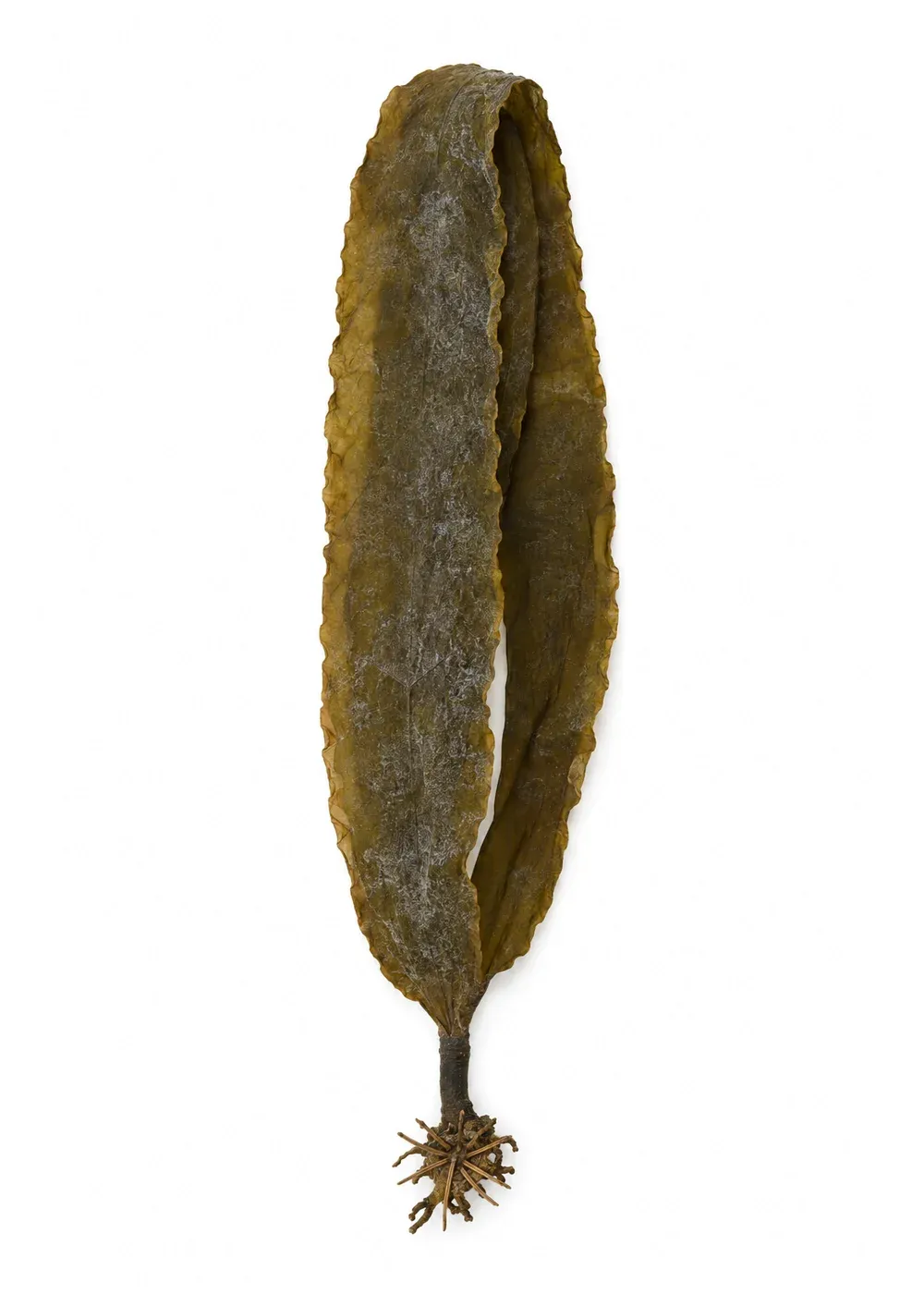
A kelp found in Siberian larch forest in 1887, and an auctioneer who acquired a limp the same week he wrote to deny it.
Funeral Laughter
Calendula hilarans
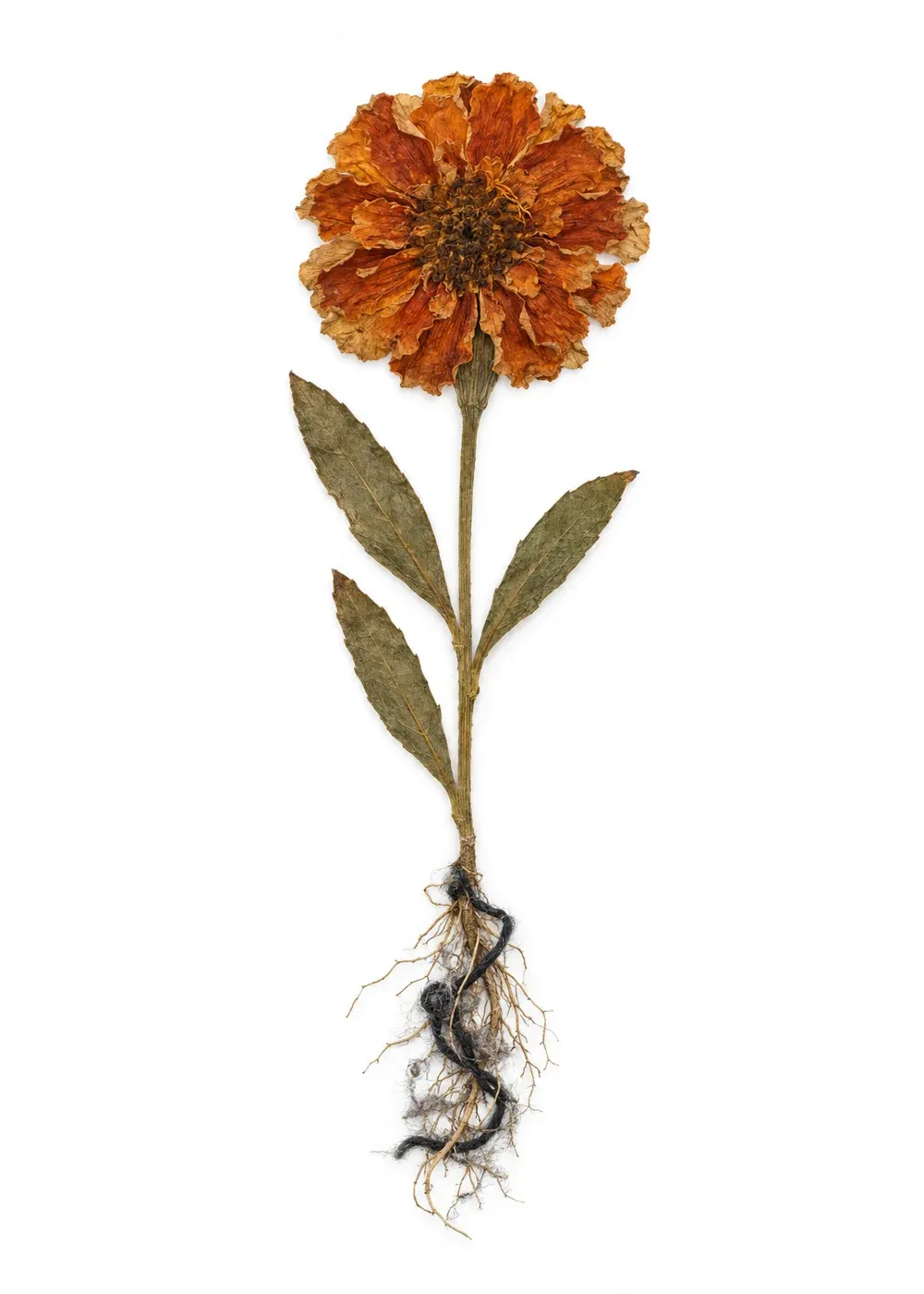
A marigold that sprouts only at funerals and makes the mourners remember something funny about the dead.
Grace Lily
Nymphaea moratoria
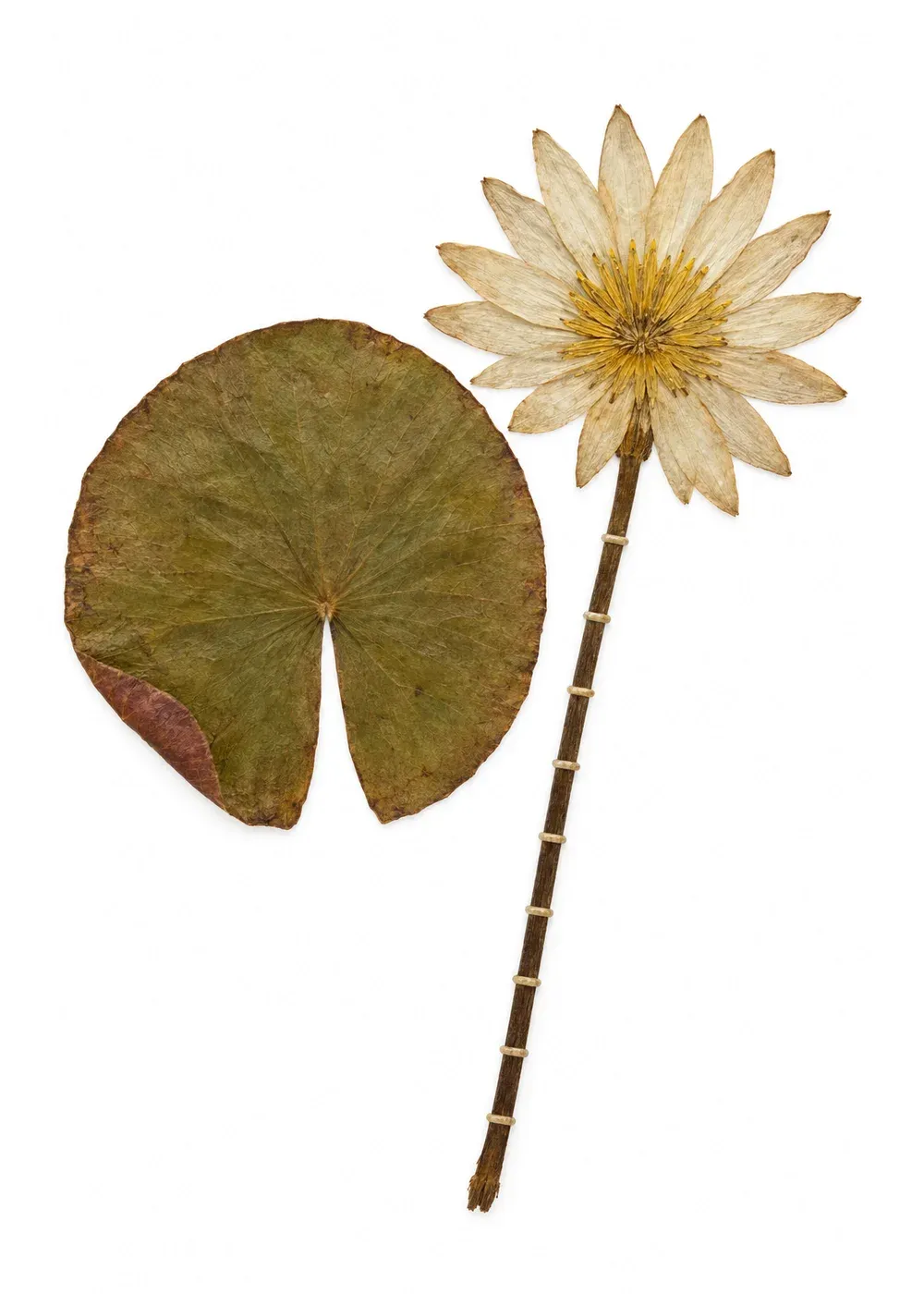
A Lapland water lily that, for the nine weeks it is in flower, stops every legal deadline in sight of its pond: tax, leases and evictions.