- No.
- H-0523
- Fam.
- Laminariaceae
- Loc.
- Bazaikha valley, near Krasnoyarsk
- Leg.
- Gavriil Matveyevich Shubin, auctioneer, autumn 1887
H-0523HerbariumLaminariaceae
Shubin's Ribbon
Laminaria famae
ArchivedA kelp found in Siberian larch forest in 1887, and an auctioneer who acquired a limp the same week he wrote to deny it.
- Collected at
- Bazaikha valley, near Krasnoyarsk
- Date
- autumn 1887
- Collector
- Gavriil Matveyevich Shubin, auctioneer
- Anomalies
- TemporalLinguisticUnstable genome
Sequenced fragment
ATGGCTCGTCAAGGCTTAGCCGATCGTGGAACTCGCGTAGCTGACGGTCATTTGTTATTTTTGTATTTGTTTAGCATCGGACGTTCGAGCTACGGTAACGCTTGATCGG
Contents 6 sections
Description
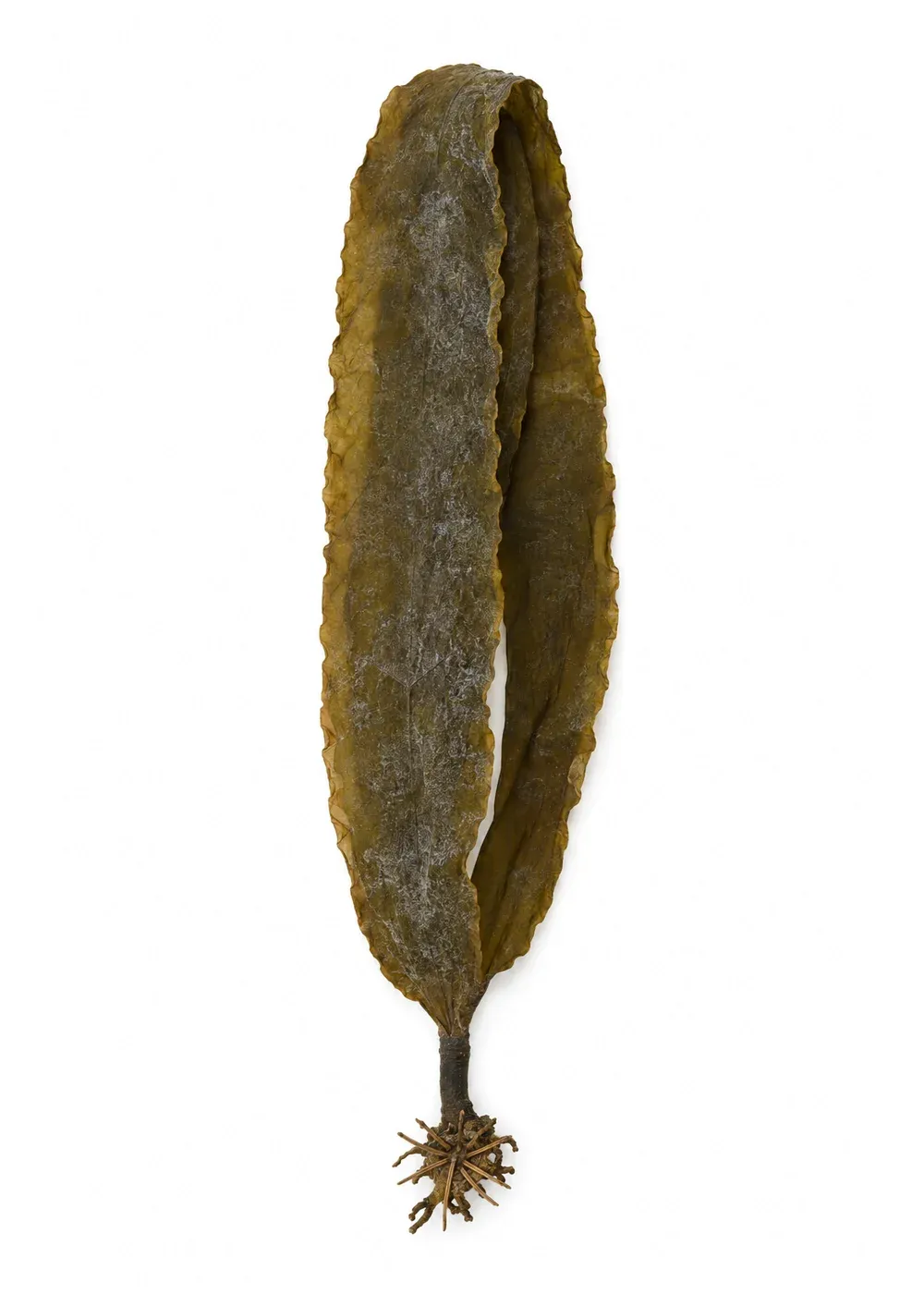
This is a single pressed and dried sporophyte of a laminarian kelp. The blade is strap-shaped and undivided, 94 cm long and 7–9 cm wide, with a slightly ruffled margin and a faint darker central band. It is folded twice to fit a board measuring 40 by 32 cm. A cylindrical stipe 11 cm long ends in a fragment of branched holdfast. The dried colour is dark olive-brown, nearly black at the stipe, with a fine white bloom of mannitol across the surface. Six needles of Siberian larch are caught in the holdfast.
Observations
By every account this marine alga was collected in dry larch forest about 2,000 km from the nearest sea. That is not why the Conservatory files it.
When something is said aloud about the specimen’s holder, in roughly the same room as the specimen, it becomes physically true of that holder. It does not happen as an event. It arrives as history: a rumoured injury turns up already healed, and as old as the rumour implied. Documented cases:
- G. M. Shubin, 1888: a limp, with a fracture of the left tibia that a physician dated at about twenty years old.
- A. Petrie, 1953: reduced hearing in the left ear, assessed as present since childhood.
Things said about anyone other than the holder have no measured effect. Denials change nothing. Since 1953 the holder of record has been the Conservatory as a body.
The file
The acquisition file for H-0523 runs to 41 pages, and most of them are about the cost of sending a board by rail from Leith. I was asked to pick out the documents that matter, so these are the ones I’d want to read if I were somebody else. The notes in square brackets are mine. — T. Mowat, volunteer
Offer of gift
Dear Sir,
I write to offer the Conservatory a pressed seaweed that belonged to my great-uncle, Gavriil Matveyevich Shubin, auctioneer of Krasnoyarsk. In the autumn of 1887 he found it lying among the larches above the Bazaikha, a day’s walk from town. My grandmother said he pressed it in a ledger-board because he could not think what else to do with it. He kept it on the shelf behind his rostrum.
After his death in 1903 it came to my grandmother, his sister Varvara, and in 1949 it came to me. The family rule was that nobody spoke of Uncle Gavriil in the room where it was kept. I have kept that rule without knowing why. I am now sixty-eight and tired of keeping it.
There is a postcard with it. I should like that to go too.
Yours faithfully, Nina Aldridge (Mrs), 14 Couper Street, Leith
[Vol.: She wrote “tired” and then crossed out a word after it. I can’t read it.]
Condition report
Laminarian kelp on board. Blade 94 cm, folded twice, sound. Mannitol bloom, not active. Larch needles (Larix sibirica, 6) at the holdfast. No insect damage.
Between the board and the blade: one picture postcard showing the Yenisei landing, addressed to Mme V. M. Ostrovskaya, Tomsk. Stamp affixed but not franked. Never posted.
Written on the card in ink, translated by Mr D. Kowalski: “Varya — whatever Anna Kuzmina writes to you, I do not limp. On Sunday I walked from the Kacha bridge to the cathedral and back without a stick. It is the talk of the rooms. They have nothing to say about a man who sells chairs, so they give him a leg. Your brother, G.”
Below it, in pencil, in the same hand but smaller: “Not sent. By Thursday it was so. Dr Lents says the break is twenty years old and badly set.”
Examined by E. Craig, conservator.
[Vol.: There are two more pages on the board. It is a board.]
Memo from the keeper
To the Director.
I recommend acceptance. The family rule should become our rule: while the specimen is in the room, nobody speaks about it with reference to any person, and no person is to be its holder. There is nobody else in the wing this month, so I propose to hold it myself until the deed is drawn up.
I am told it is being said in the receiving room that I am going deaf. I am not.
A. Petrie, Keeper of the Herbarium
Deed of transfer
Mrs Nina Aldridge of Leith transfers to Alasdair Petrie, Keeper of the Herbarium, for the Conservatory, one pressed kelp and one postcard, unconditionally and without payment.
Signed N. Aldridge, A. Petrie. Witnessed J. Baird, Registrar.
[Vol.: This is the one that got corrected. You can see where someone has put a pencil tick in the margin.]
Notice of correction
Issued by the Registrar, 9 June 1953.
- Deed of transfer. For “to Alasdair Petrie, Keeper of the Herbarium, for the Conservatory” read “to the Conservatory”. No individual is the holder, and none has been.
- Memo from the keeper, final paragraph. The sentence “I am not” is withdrawn as inaccurate. Mr Petrie was examined on 2 June and found to have had reduced hearing in the left ear since childhood, probably after measles. Mr Petrie does not remember having measles. His mother, written to, remembers it clearly.
- At the Keeper’s request, the original documents stay in the file uncorrected.
J. Baird, Registrar
[Vol.: That’s the end of the file apart from the rail invoice. 14s 6d.]
Genetic analysis
The specimen was sequenced in 2009 and 2017 from a 2 mm punch taken at the blade margin. It resolves firmly within the Laminariaceae, closest to Saccharina latissima. Nuclear GC content is 52%, which is ordinary for the family. Nothing in the genome explains how it came to be in Siberian forest.
The lowercase stretch is the problem. In 2009 the run dropped out over this region, and the technician’s log reads: “probably a sequencing error, ignore.” When the run was repeated in 2017, the error was in the tissue. It is a 23-base, AT-rich insertion found in no other known kelp, and it carries C→T substitutions near the fragment ends. This is the deamination damage expected of DNA that has spent about 130 years in a press.
The region is new, and it shows the damage of tissue that has been dry since 1887.
Cultivation
Not cultivated. A dried laminarian sporophyte is not viable, and the Conservatory has made no attempt to culture spores from it.
There is a second reason, set out in the keeper’s memo of 1953. A living culture would need someone to look after it, and that person would become its holder. The board stays in a closed drawer in H-wing, registered to the Conservatory as a body. It is not lent, and its drawer is opened only for condition checks, by two people at a time, neither of whom signs for it alone.
Effects
The specimen affects only its holder. Talk about the holder spoken near it becomes true of them, physically and retrospectively, and comes with whatever records it needs: a healed bone, a mother’s recollection.
The full file includes a later letter from Mrs Aldridge. In it she says Shubin died in 1903 with a limp, a stammer and a debt to a card club in Yeniseisk he had never visited. Each was first heard in his own auction rooms.
Since 1953 the holder has been the institution. Staff in H-wing are asked not to speculate about the Conservatory while the drawer is open. Whether this works is hard to judge, because an institution has no left ear. The leak in the drawer-room roof was first complained of beside the open drawer in 1961. Three surveyors since have found that it dates from construction.
Filed alongside
Hollow Elm
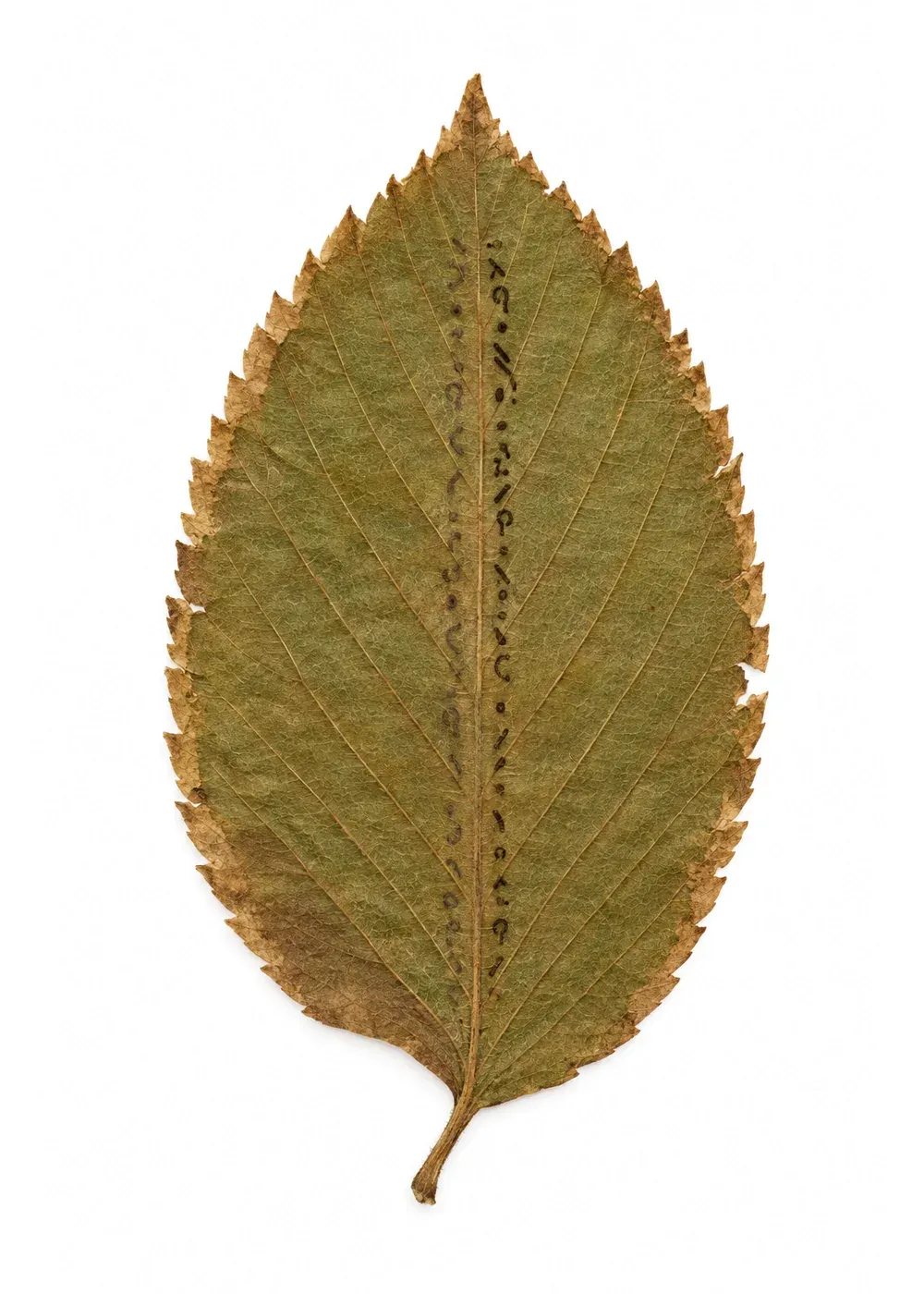
Ulmus testamenta
An elm whose growth rings record the last words spoken near it each year — and which has started recording words that have not been spoken yet.
Fourth-Cone Mammillaria
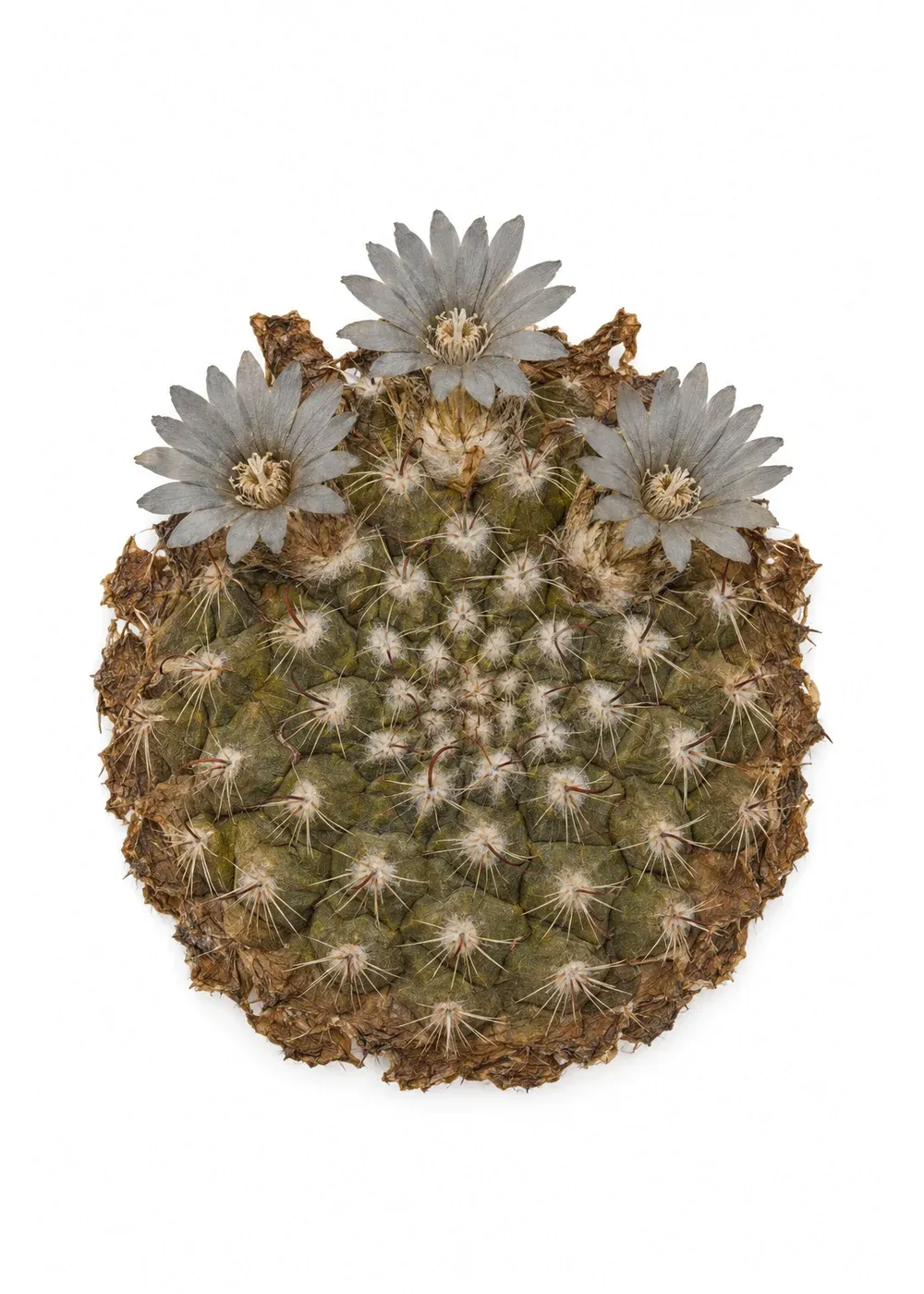
Mammillaria griseiflora
A Kutaisi windowsill cactus flowers grey to every human eye and bright to every spectrometer, and one unclaimed exam answer names the colour.
Quorum Thistle
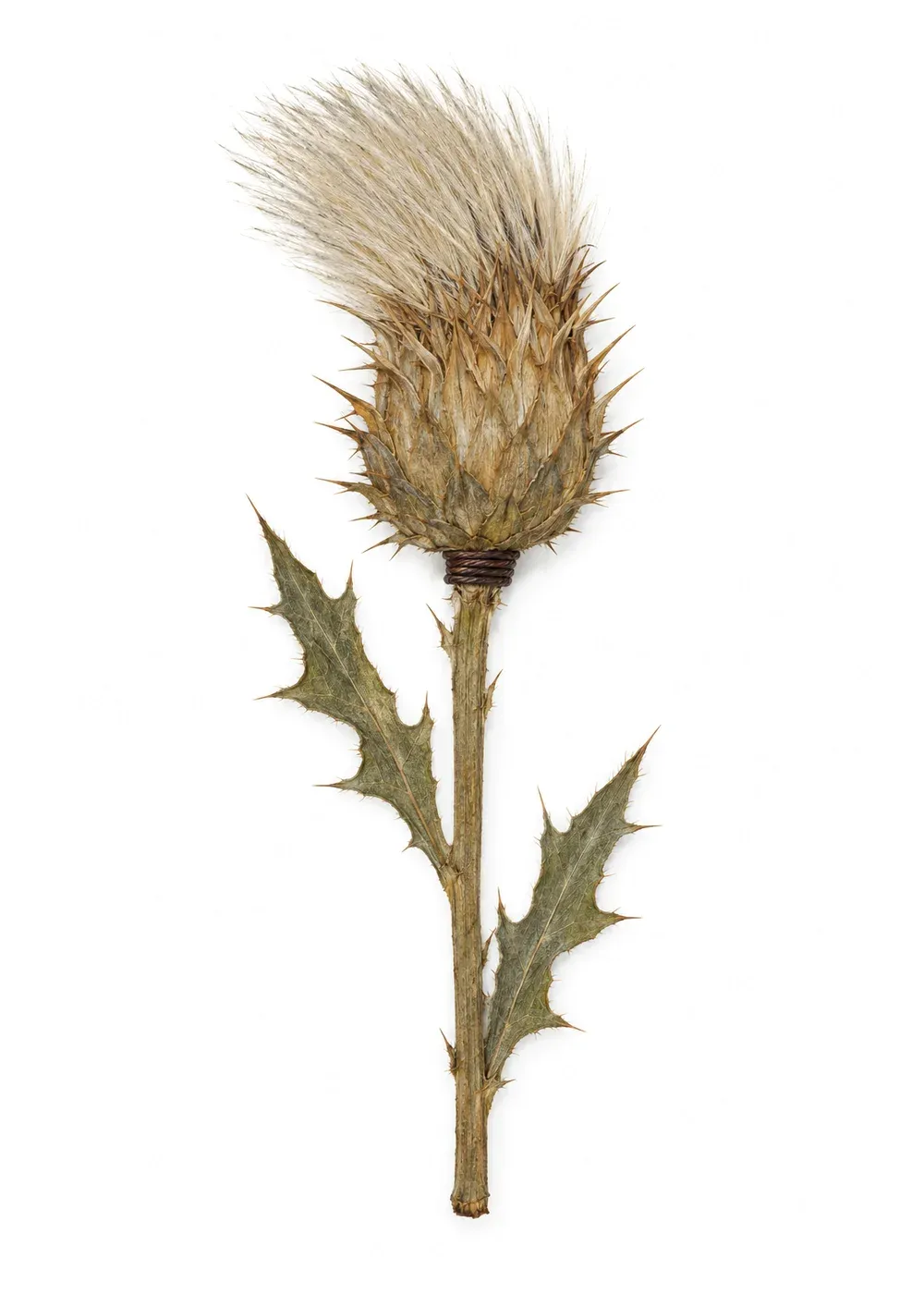
Cirsium consensus
A thistle colony that voted, measurably, on where to spread next, and was destroyed after its third vote.