
- No.
- G-0203
- Fam.
- Nymphaeaceae
- Loc.
- Kittilä church village, Lapland
- Leg.
- Matti Aukusti Rauhala, beekeeper and crofter, May 1897
G-0203GlasshouseNymphaeaceae
Grace Lily
Nymphaea moratoria
Under cultivationA Lapland water lily that, for the nine weeks it is in flower, stops every legal deadline in sight of its pond: tax, leases and evictions.
- Collected at
- Kittilä church village, Lapland
- Date
- May 1897
- Collector
- Matti Aukusti Rauhala, beekeeper and crofter
- Anomalies
- BureaucraticTemporal
Sequenced fragment
AAGCTTCACATATAAACCGTTGGACAAGTCTCCAGGCTAATTTAGGGTTTAGGGTTTAGGGTTTAGGGTTTAGGGTTTAGGGTTTAGGGTTTAGGGTTTAGGGATGGCTAGCAAG
Contents 6 sections
Description
A perennial aquatic herb growing from a stout horizontal rhizome. The floating leaves are nearly circular, 10–14 cm across, with a deep, narrow basal notch. They are glossy green above and wine-red beneath. Each year it bears one flower, 7–9 cm across, held at the water surface. The four sepals are green outside. There are sixteen to twenty white petals, narrowly ovate, and many yellow stamens surround a concave, ten-rayed yellow stigma. The flower stalk shows faint pale rings at regular intervals. The Conservatory keeps one plant, in a zinc tank 1.2 m across.
Observations
The plant flowers once a year, and only after six days of unbroken light. Its single flower opens and stays open, without closing at night, for exactly 63 days. Then it closes and does not open again that season.
While the flower is open, every legal deadline attached to a person, property or document within line of sight of it stops at the hour of opening. It resumes at the hour of closing with the same time left to run. Rent, tax, lease terms, notice periods, limitation periods and terms of office all behave this way. Nothing is cancelled. Everything is delayed by 63 days.
Line of sight is literal. A drawn blind is enough to keep a deadline out of it. Interest is calculated rather than falling due, so it goes on accruing. Each year the Conservatory’s solicitor draws up a sealed 30-day test contract, and it has expired on day 93 every year since 1931.
The file
The bailiff’s letters are held in the provincial archive at Oulu, and the governor’s replies survive there as office drafts. These are translated from Swedish. The last letter, in Finnish, came to the Conservatory with the rhizome.
The Crown Bailiff to the Governor
Your Excellency,
I have the honour to report that the crown tax arrears for 1893 in the church village remain uncollected, though I was present on every due date.
Between 4 June and Monday 6 August, nothing fell due within sight of the pond on the croft of the beekeeper Matti Rauhala. That covers the market place, the church hill, the inn and my own office. Mr Sirviö, clerk of the district court, has checked my figures and then his own. An eviction notice I served on the tenant Kaisa Niemelä on 20 May, to take effect on 20 June, took effect yesterday. The lease on the Ounasjoki meadow, due to end on 30 June, will end on 1 September. Nothing has been forgiven. Every date has simply moved nine weeks later.
The only thing in flower at the pond was one white lily. Rauhala says it opens once the sun stops setting, and that his bees do not visit it.
I would be grateful for instruction.
J. F. Lindfors, Crown Bailiff
The Provincial Secretary’s draft reply
The Governor has read your report with attention. He notes that the statute reckons time by the calendar, and that the calendar in Kittilä is the same as in Oulu. He is not able to give instructions to a plant.
Your accounts for the year are to be submitted by 1 November as usual. The Governor asks that you not submit them in June.
C. E. Hällström, Provincial Secretary
The Bailiff to the Governor, again
Your Excellency,
The village has learned. Leases are now drawn up to end at midsummer. A creditor from Levi brought his ten-year promissory note to the church hill in June so that its time would not run out before he found his debtor. The parish meeting has asked me whether the poor-relief board’s term can be held over until August. Kaisa Niemelä has taken a room at the inn with a window onto the pond and has booked it for every summer.
In July I nailed a notice to the north wall of the church, where the pond cannot be seen. The next morning it was found nailed to the south wall. Nobody saw who moved it. I have not asked.
I request permission to have the lily removed.
J. F. Lindfors
Hilma Rauhala to the Conservatory
To the Conservatory,
My father, Matti Rauhala, lifted the lily out of the pond in May 1897 because Mr Lindfors asked him to, and they were friends. He kept it in a washtub in the cellar under the potato sacks. Down there it made pale leaves and no flower.
He brought it up only once. Mr Lindfors was to retire on 1 July 1901. On 27 May my father carried the tub to the bench outside the bailiff’s office and left it there. Mr Lindfors sat beside it most evenings that summer. They did not talk about it. His retirement took effect on 2 September.
My father died in March and the cellar is to be filled in. I have kept the tub, in case you have no use for it.
It was the only summer Mr Lindfors did not write to Oulu.
Hilma Rauhala
Genetic analysis
The genome is broadly that of a northern white water lily, close to Nymphaea candida. It differs at one locus. Forty base pairs upstream of the start codon of NmFT1, a FLOWERING LOCUS T homologue that controls when the plant flowers, there is an uninterrupted array of nine TTTAGGG units. That is the standard plant telomere repeat.
Telomere-like repeats inside chromosomes are common in plants. Nine perfect units sitting in a flowering promoter are not. The array is 63 base pairs long. The bloom lasts 63 days. The unit count matches the number of weeks.
The original rhizome and the 1958 offset both carry exactly nine units. Nobody has edited the array, and nobody has proposed to.
Cultivation
The lily grows in a zinc tank of soft water over loam in the north bay of the Glasshouse. Under ordinary day length it produces leaves and nothing else. It needs a cold, dark winter rest from November to February.
Each year the head of the Glasshouse switches on continuous lamps over the tank. The flower opens six days later. The lamps go off once it has opened, because the flower keeps its own count from then on. The date is chosen in March from the staff room noticeboard. Anyone may pin a slip there by 1 March naming a deadline that would be better a little later.
The tank stands in front of a window that faces the almshouse across the lane. The curtains on that side are not drawn.
The plant sets no seed. The rhizome was divided once, in 1958, and the offset is kept in a separate house. The offset has never been lit.
Effects
For 63 days each year, legal time stops for whatever can see the flower. Rent, notice periods and terms all start again afterwards, exactly where they stopped.
At Kittilä this came to organise the village’s year. Debts were dated to fall due at midsummer, and anyone facing eviction moved to a room with a view of the pond. People took advantage of it whichever side they were on. The pause protected creditors as much as tenants.
At the Conservatory the effects are smaller and kept on record. Library books stay within their loan period. In 1962 an apprentice’s indenture lasted nine weeks longer than written, and he finished the training he would otherwise have missed. Blinds in the accounts office are kept down during flowering, by standing order.
Some things do not stop. Interest still accrues, the seasons still turn, and the lily’s own leaves still age.
Filed alongside
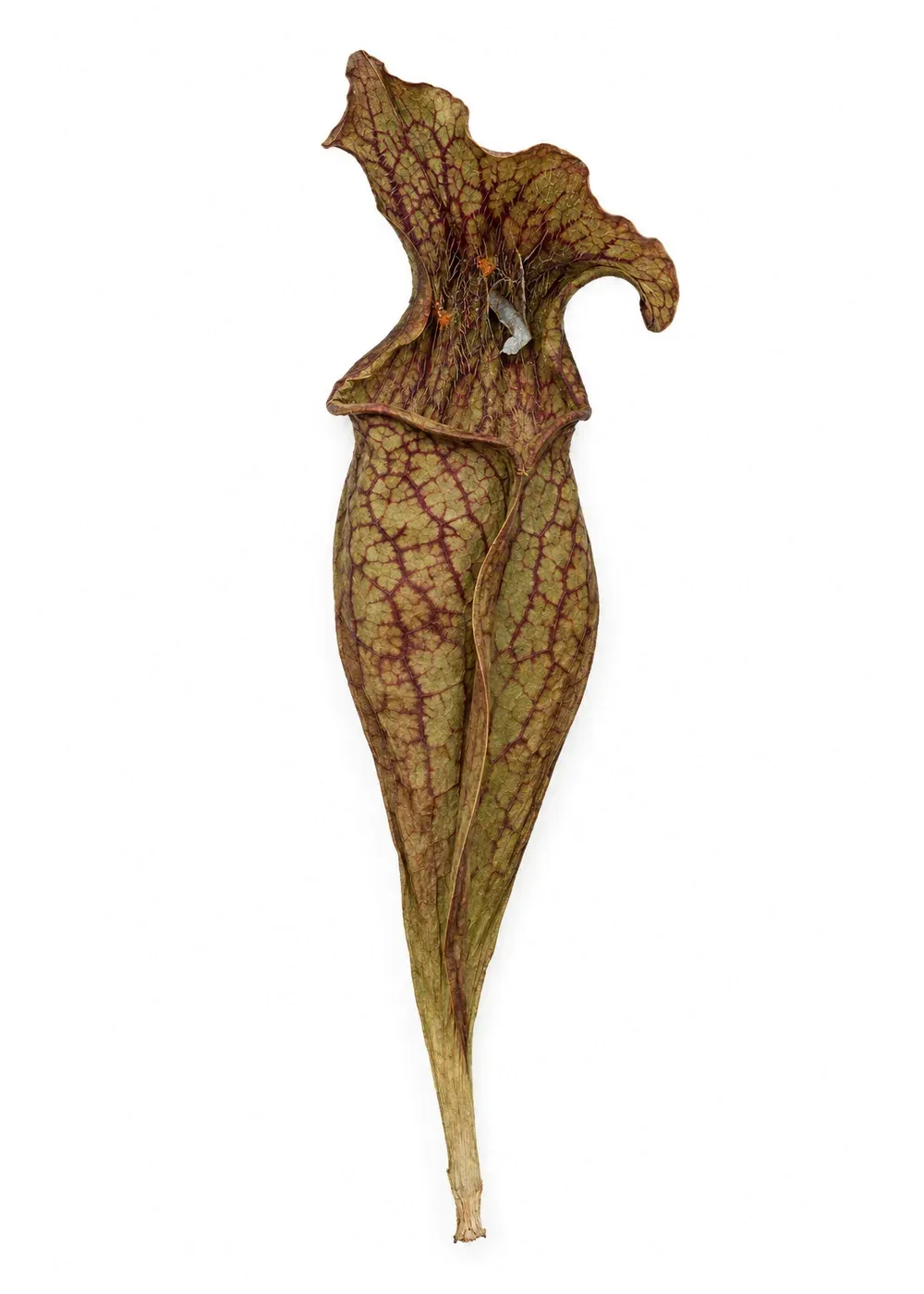
Tithe-Map Pitcher
Sarracenia purpurea
A purple pitcher plant whose tin chapel turned up in a 1790 vestry minute, just in time to beat a council demolition order.

Funeral Laughter
Calendula hilarans
A marigold that sprouts only at funerals and makes the mourners remember something funny about the dead.
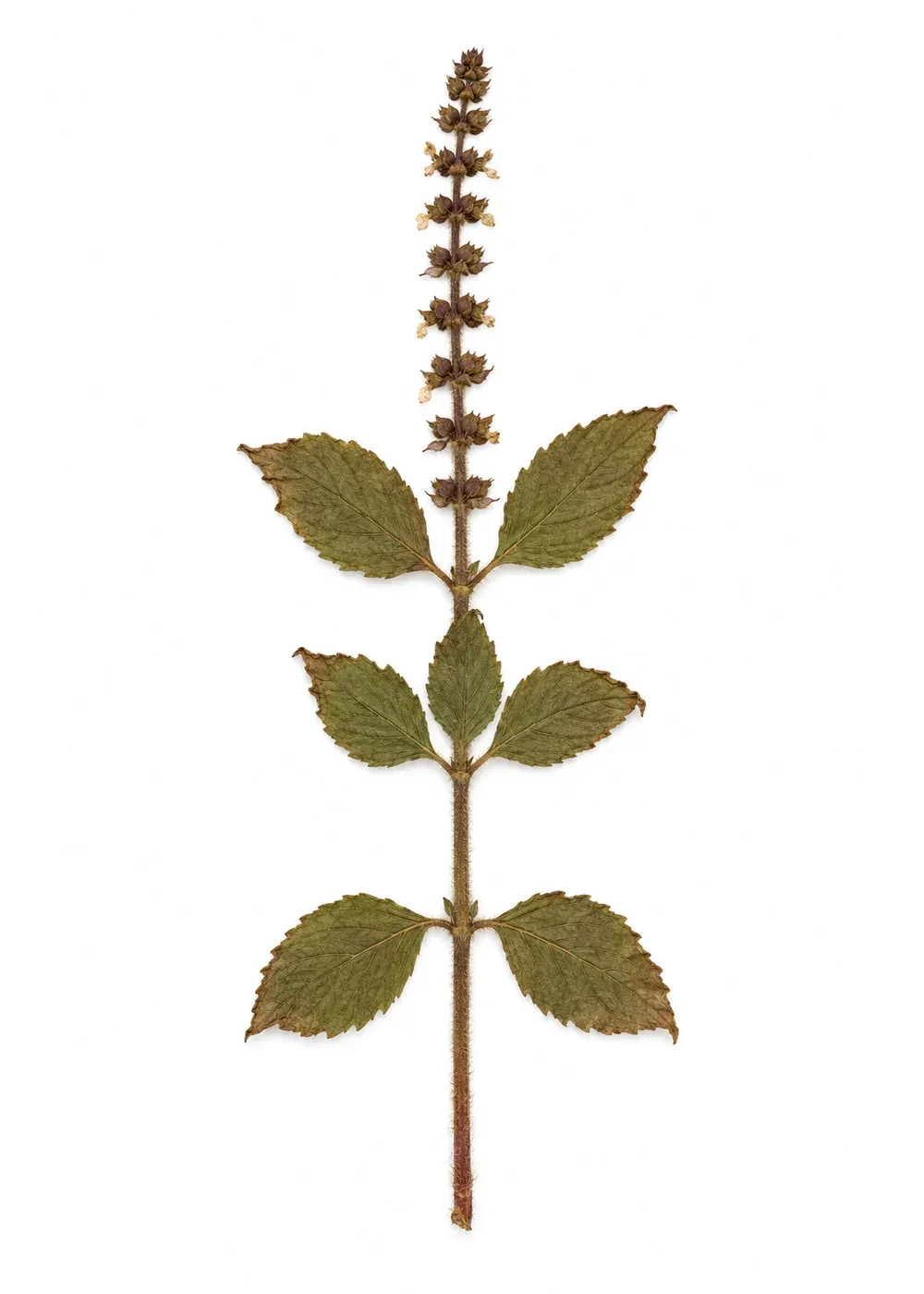
Extra Place Basil
Ocimum gratissimum
A fokontany-office basil from Toamasina adds one name to every list made beside it: a living person no register has ever recorded.