- No.
- H-0535
- Fam.
- Poaceae
- Loc.
- Vukovar river port, Yugoslavia
- Leg.
- Mirko Tadić, pharmacist, February 1972
H-0535HerbariumPoaceae
Threshold Oboe-Cane
Arundo donax
ArchivedAn oboe reed cut from Vukovar cane is silent except in doorways, and its maker listed 37 of them and sealed a 38th in a footnote.
- Collected at
- Vukovar river port, Yugoslavia
- Date
- February 1972
- Collector
- Mirko Tadić, pharmacist
Sequenced fragment
ATGGCGTCCAAGCTGCACGGCGTCTTCGAGTCCTACAGCGGATCCAGCTGGATCCTTCGCGGCGTCGTCGGCGGCAAGCTCGTCGAC
Contents 6 sections
Description
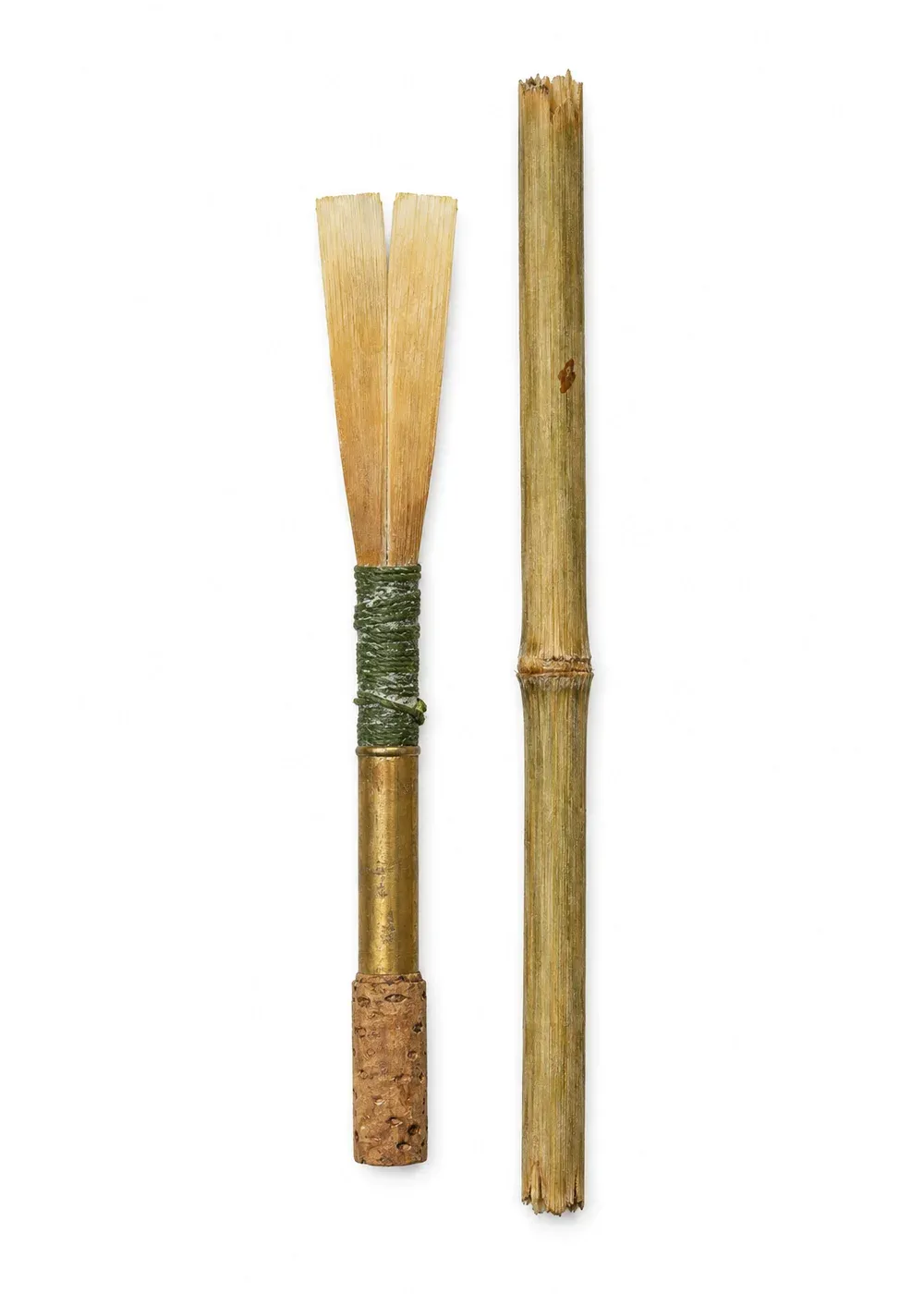
The specimen is a finished double reed for oboe, held with an offcut of the cane it was made from. The reed is 72 mm long overall. Its two blades of Arundo donax cane are scraped in a long U to a tip opening of about 1 mm and tied with green nylon thread to a brass staple 47 mm long, whose lower end is wrapped in cork. The bark is golden-tan and the scraped area pale straw. The offcut is a 9 cm length of culm, 10 mm across, with one node and a small brown fleck on the outer surface. Both pieces are dry and sound.
Observations
In a doorway the reed is unremarkable. Anywhere else it does not sound at all.
Silence
Away from a doorway the reed gives no sound at any breath pressure. Air passes through the aperture at a flow rate normal for a working reed, but the blades do not move: high-speed film at 2,000 frames per second shows them still. On an artificial blowing rig it is silent everywhere, doorways included. It sounds only when a person stands in the doorway and blows it.
The doorway condition
The reed sounds once both of the player’s heels are within the depth of the frame. Which way the player faces makes no difference, and the instrument may reach out past the jamb. If one heel steps out, the note stops within a tenth of a second, mid-phrase.
Openings that never held a door do not count. Arches with no hinge positions, windows and gaps in hedges all stay silent. Frames from which a door has been taken off do count. Played in a qualifying doorway, it is a good reed, slightly bright, at A = 440.
Trials at the Conservatory
Between 1979 and 1981, 41 doorways in the Conservatory buildings were tried, and the reed sounded in all 41. The doorway in the basement corridor that was blocked up in 1911 is not among them.
The file
Mirko Tadić, pharmacist at Ljekarna Vukovar 2, put this file together himself and sent it upriver with the reed in May 1979. He filed the documents in the order below. He numbered his footnotes in pencil, all except one.
Oboe section: special paper on the doorway reed
An examination set and marked by M. Tadić for V. Perić, aged sixteen, second oboe of the Fire Brigade Wind Band. The answers are in her hand.
Answer all questions. You may not use the reed during the examination. One hour, at the dispensary counter.
Question 1 (5 marks)
Name the plant the reed is made from and say where it was cut.
Answer: Arundo donax, giant cane. It comes from the stand behind the grain shed at the river port, below where the Vuka goes into the Danube. Mr Tadić cut it in February, when the stems were dry and gold.
Examiner: 5. It was the third stem from the water.
Question 2 (10 marks)
Define a doorway for the purposes of the reed.
Answer: Both heels inside the line of the jambs, facing either way. A door must have hung there, so there have to be hinges or the holes where hinges were. The arch at the Eltz manor gatehouse does not play. A window does not count, even if you can stand in it. Take half a step out and the note stops in the middle.
Examiner: 10. Add that a wardrobe does not count. I have tried one.
Question 3 (10 marks)
How many doors in Vukovar are on the list?
Answer: Thirty-seven. The best are No. 4, the fire station hall, No. 19, the side door of the post office, and No. 31, the ferry waiting-room.
Examiner: 10. Correct for the list as it stands.
Question 4 (15 marks)
Where was the reed first heard, and how?
Answer: At Sunday rehearsal in the fire station, March 1972. Mr Babić was late with the tuba, so Mr Tadić got up to open the door for him and played his entry standing in the doorway. When he went back to his chair the reed stopped. After that Mr Šimunović made him sit in the door.
Examiner: 15.†
Question 5 (10 marks)
The conductor says “From bar 40.” What do you do?
Answer: Stand up, take two steps left into the door and wait for the downbeat. Do not lean on the jamb. It makes no difference to the sound, but it marks the paint.
Examiner: 10.
Examiner’s report
Total 50 out of 50. From next Sunday the candidate may use the reed at rehearsals, in door No. 4 only. Her answers repeat what I told her and what is on the list, and on those terms they are correct.
† A separate slip, folded and sealed in red wax with the dispensary seal (bowl and serpent, Ljekarna Vukovar 2). The seal was intact on receipt and was broken at accession on 30 May 1979 by the duty registrar. The slip is in ink:
“Not the fire station. That was the first time anyone else heard it. The first time was Thursday 9 March 1972 at 7.40 p.m., after closing. I had been crowing the new reed at the counter for a week and it was dead. I stood in the recess behind the poison cupboard to reach the top shelf, and there it crowed. The recess is the door to No. 14, bricked up in October 1944 when the Hoffmanns left. It is 19 cm deep. It is not on the list because it is not a door. I have tried it there on 212 evenings and it has played every time. I would rather Vesna learned it at the fire station.”
M/S Fruška Gora, Vukovar to Vienna: cargo
The consignor’s copy of the cargo papers, returned to M. Tadić with the purser’s and customs annotations and filed by him
Crates 1–36 — Bottled wine, Ilok
36 crates of 12 bottles, consigned to Vienna. Nothing to remark.
Parcel 37 — Botanical, one reed
One oboe reed in a wooden case, 9 × 3 cm, with one offcut of cane, a list of doors (4 sheets) and an examination paper with a sealed slip. Consignor: M. Tadić, Ljekarna Vukovar 2. Consignee: the Conservatory. Instructions: do not try the reed; do not open the slip.
Purser’s remarks
During the night of 16–17 May, deckhand B. Lukić opened parcel 37 and tried the reed in the galley door, and it played. The passengers in cabins 3 and 4 complained of an oboe at 1 a.m. The reed was put back in its case. Nobody touched the seal on the slip. Lukić has been docked one day’s pay. — D. Marić, purser
Margin, Tadić’s pencil: A ship’s door, then. Not added to the list, because it is not in Vukovar.
Customs, Mohács
Parcel 37 examined. The officer blew the reed at the inspection table and it made no sound. Classified as unworked plant material, not a musical instrument. Duty nil. The slip’s seal is intact and the slip was not opened; the consignor’s description, “one footnote”, is accepted. — K. Varga
Customs, port of landing
Vienna, Reichsbrücke landing. Seal intact. Released to the Conservatory’s carrier.
Threshold oboe-cane (the Vukovar reed)
Written by M. Tadić in the manner of his pocket flora and typed on dispensary paper
Identification
A single double reed, 72 mm, of golden cane on a brass staple with green binding. One specimen known. Silent in the hand.
Habitat
Doorways. Recorded at 37 in Vukovar (see list), from the fire station hall to the ferry waiting-room. Absent from open ground, rooms, streets, the bandstand in the park and the middle of the Danube.
Season
All year. Most often heard on Sundays, when the band rehearses, but that reflects the observer’s effort and not the reed.
Similar species
Any oboe reed of Var cane. Var cane plays anywhere, so the two are easily told apart.
Do not confuse with
Common reed, Phragmites australis, from the bank below the port, which children make into whistles. It also plays anywhere. It is no use for an oboe.
Organoleptic notes: offcut of the third stem
Tasting notes by M. Tadić on the cane left over from the reed, set out like the pharmacopoeia’s tests for crude drugs
Appearance
Glossy golden bark with one brown fleck 4 cm from the node. The pith is white and dry.
Nose
Hay, a little resin, the grain shed. Nothing of the river.
Palate
Soaked three minutes in the mouth, as for a reed. Bitter at first, then sweet like a maize stalk, with slight astringency at the sides of the tongue. Within the usual range for Arundo.
What it did afterwards
I gouged a second blank from the offcut and tied it on a spare staple. It was dead at the table and dead at the window, and it crowed at the kitchen door. I have not made a third. The offcut is enclosed.
Genetic analysis
Across Europe Arundo donax is sterile and spreads by rhizome. Plants from Portugal to the Danube are, to a first approximation, one clone with about 110 chromosomes, so any departure is easy to see.
Tissue from the reed blades and from the enclosed offcut carries a 16-base insertion near the 5′ end of a secondary-wall cellulose synthase gene (CesA). This family was sequenced first because cellulose in the cane wall sets how stiff an oboe blade is. The insertion is a perfect palindrome: both strands read identically, so the sequence is the same from either side.
Rhizome sampled from the port stand in 1980, at Tadić’s expense, does not carry it, and neither do three further stems he sent from the same clump. Only the third stem from the water has it. Nothing in the gene’s expression accounts for a doorway.
Cultivation
Not cultivated. The specimen is a finished reed and a dried offcut, and neither will root.
Rhizome from the Vukovar port stand was received in 1980 and grows in the Glasshouse service yard as ordinary Arundo donax. In 1984 a visiting oboist cut six reeds from it, and all six played everywhere, including the yard. The stand behind the grain shed was gone by 1992, and the port has since been rebuilt.
The reed itself is kept dry in its original case and is not played except for scheduled trials, which must be held in a listed doorway.
Effects
- The fire station. From March 1972 to May 1979 the hall door was propped open on Sundays so the oboe could sit in it. The brigade committee’s minutes record a complaint about heating coal in every one of those winters.
- The band. The seating plan was redrawn around the door. Seven years of second-oboe parts carry Šimunović’s pencilled arrows marking when to stand.
- Customs. One reed passed into Hungary officially classed as not being a musical instrument.
- The ship. One deckhand lost a day’s pay for trying it in the galley door.
- Tadić. He went on playing with Var cane reeds after 1979. A letter from the conductor in 1983 notes that Tadić sat in a chair again, near the back, and that the dispensary’s poison cupboard had been moved.
Filed alongside
Third-below Coelogyne
Coelogyne subtertia
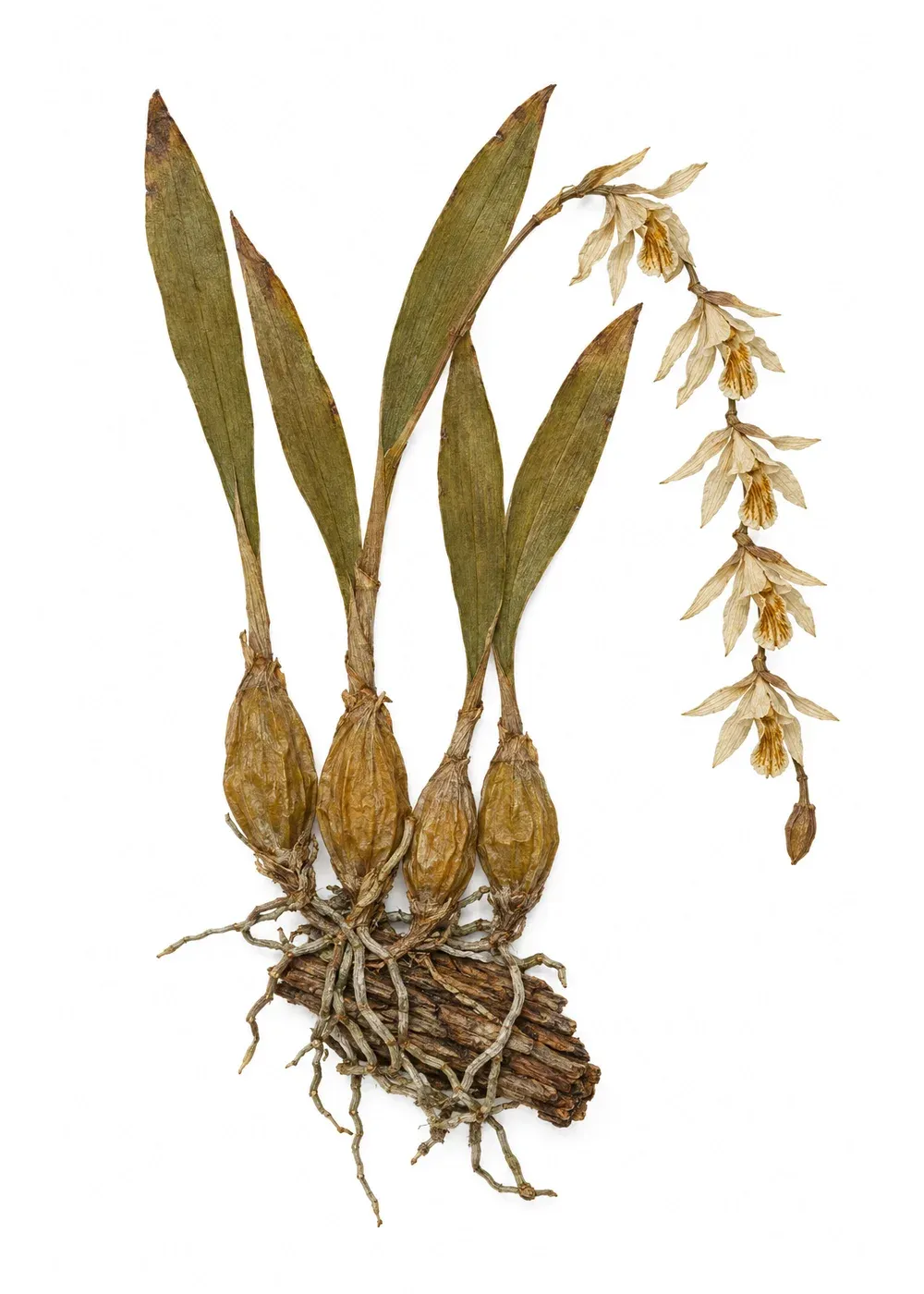
Lisu children raised under one Fugong chestnut can sing only a third below another voice; alone they make no note, and neither does the dog.
Thirty-Round Tillandsia
Tillandsia rivasii
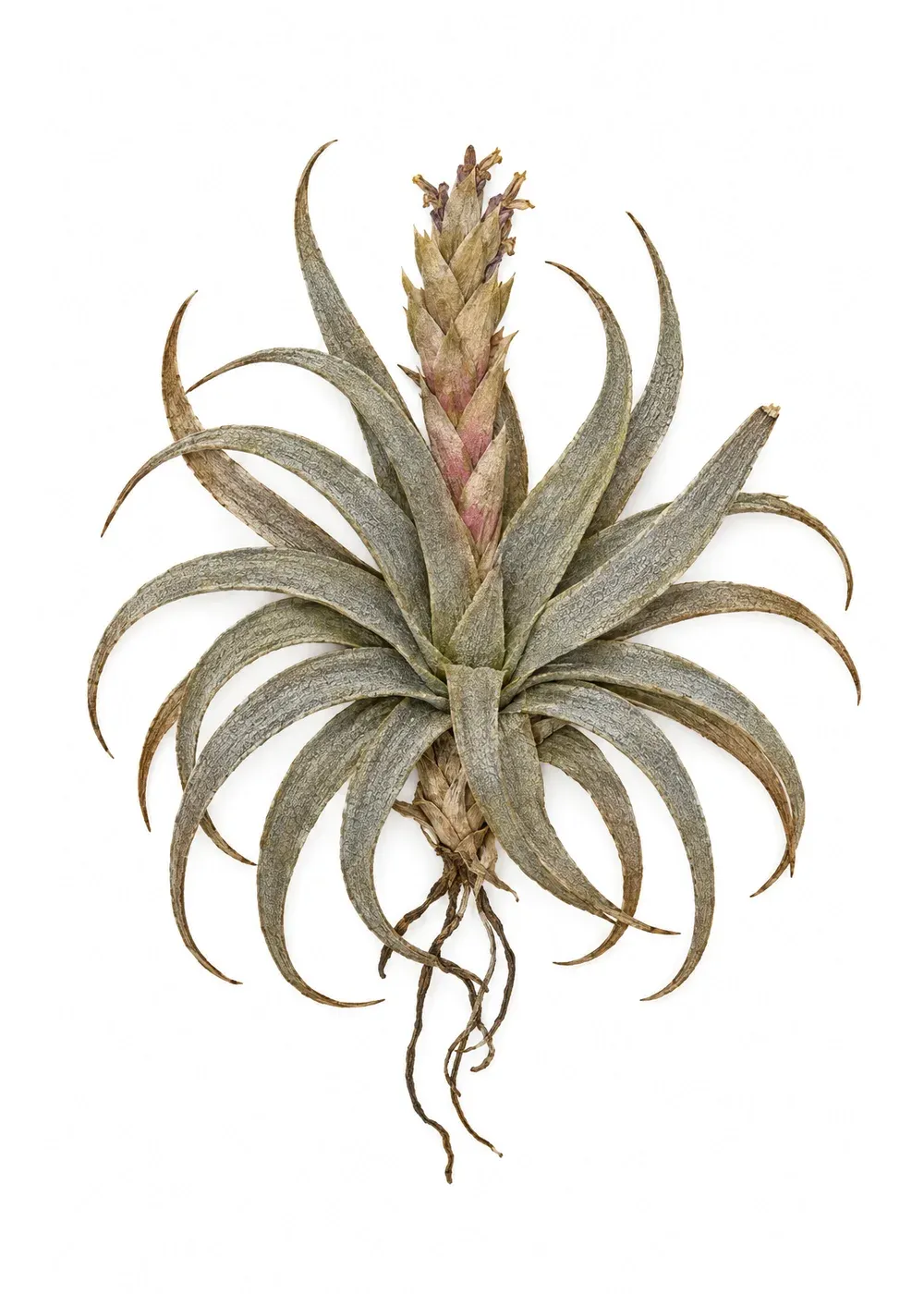
A pressed Atacama air plant makes every circle near it exactly three diameters round, and a ship's purser had to restate its drum for customs.
Quiet Crust
Lecanora liminis
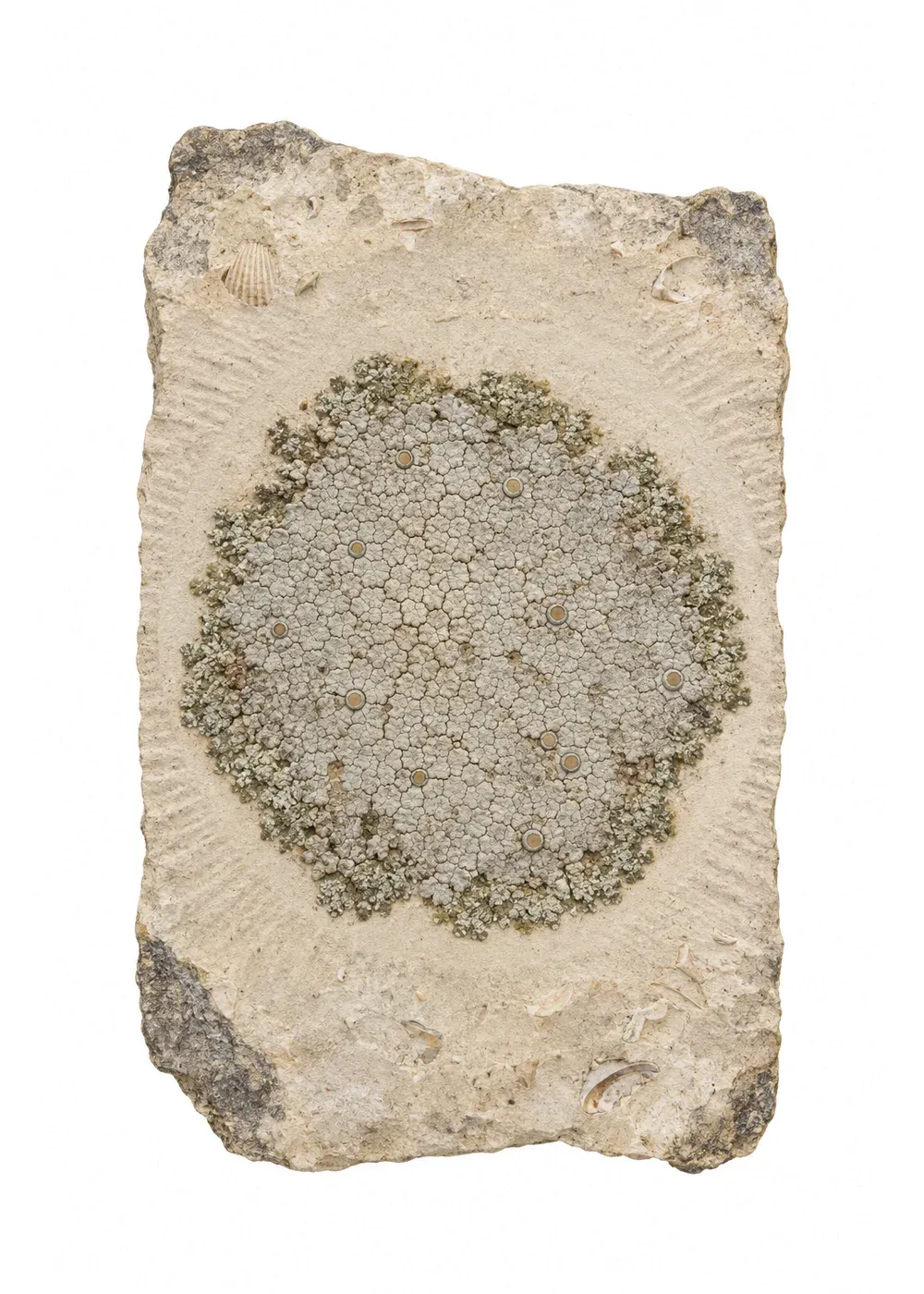
A grey doorstep lichen from Mansourah that keeps a circle of perfect silence around itself, 2 mm wider every year.