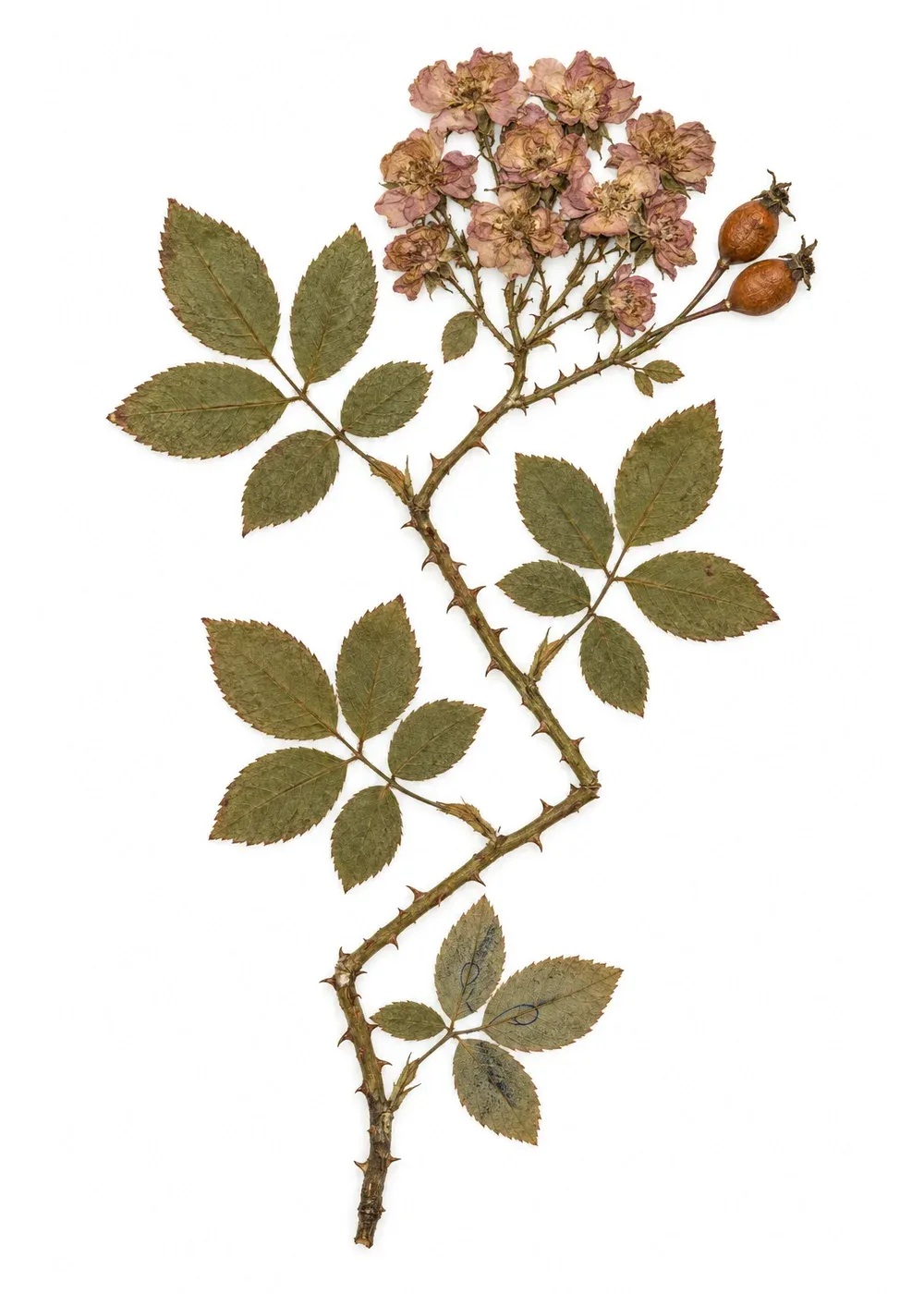
- No.
- H-0539
- Fam.
- Rosaceae
- Loc.
- Trade Canal, Libau (Liepāja)
- Leg.
- Kārlis Bērziņš, glassblower, June 1904
H-0539HerbariumRosaceae
Countersigned Rambler
Rosa libaviensis
ArchivedFrom 1904, whenever a Libau glassblower signed his name, his hand wrote the name of his rose instead, including on his will.
- Collected at
- Trade Canal, Libau (Liepāja)
- Date
- June 1904
- Collector
- Kārlis Bērziņš, glassblower
- Anomalies
- BureaucraticEncoded message
Sequenced fragment
ATGGCTTCAAGGAGTTCTTGCAACTTCAAGCAGTAGTGCAAGCACCCCAGCCGGCAGCCATGCCATGTTTGTAAGCTTCATCTAGAATCCACA
Contents 6 sections
Description
A single flowering cane of a rambling rose, 61 cm long, pressed in three folds. Prickles paired, hooked, 4–6 mm, with scattered bristles between. Leaves pinnate, of seven elliptic leaflets 2–3.5 cm, finely serrate and wrinkled above; stipules deeply fringed. A corymb of eleven flowers and buds; flowers semi-double, 3.5 cm across, petals dried pale brownish pink, styles joined in a short column. Two ovoid hips, 9 mm, dried orange-brown.
Observations
From June 1904 until his death in March 1923, the glassblower Kārlis Bērziņš could not sign his own name. Whatever he signed, in ink or pencil, his hand wrote Rosa × and a cultivar epithet in single quotes, at his usual speed, slope and pressure. He could still write ‘Kārlis Bērziņš’ in a sentence or a list. Only signatures changed.
The epithet shifted every June by a word or a few letters: ‘Libavia Rubra’ in 1904, ‘Libavia Pallida’ in 1922.
The pressure of the signature he meant was unaffected, so anything beneath the page received his real name. A carbon sheet placed under his third codicil in 1919 holds ‘K. Bērziņš’ in reverse. The codicil above it is signed Rosa × ‘Libavia Pallens’.
The file
Sent in November 1939 by Marta Kalniņa, porter at the Liepāja harbour office, with one pressed cane, a copy of the will and the carbon sheet. Her notes are in italics.
Lost-property register, Libau harbour office
Lost-property register kept by A. Freimanis, clerk; entries copied by M. Kalniņa, porter
Only the entries for the rose and what came with it. The book stays with the office. — M.K.
Item 1187 — One climbing rose, in a tub
21 June 1904. Handed in by K. Bērziņš, glassblower at the Trade Canal bottle works, who found it as a seedling in the cullet heap and states that it is his. Finder’s signature: Rosa × ‘Libavia Rubra’. Entered at the finder’s insistence, finder and owner being the same. Collected the same afternoon.
I was porter then. I carried the tub back to the canal for him. Three canes, aphid on all of them. He came back every June after that, the Saturday nearest Midsummer. He wanted it written down by someone who would not do him a favour.
Item 2236 — The same rose, on a handcart
21 June 1913. Seven canes, in flower. Finder’s signature: Rosa × ‘Libavia Rosea’. Collected.
By then he had made his will. The solicitor said a signature is whatever a man habitually writes. Mr Bērziņš doubted a court would agree. He was right four times out of five.
Item 2701 — The same rose, owner deceased
30 April 1924. Handed in by the landlord, the estate being undistributed. Released to M. Kalniņa under the third codicil by order of the court at Riga.
I planted it on the yard wall under the harbourmaster’s window. By 1930 it covered the wall.
Item 2702 — One sheet of carbon paper, used
9 May 1924. Handed in by E. Liepiņš, clerk to J. Ozols, solicitor, in an envelope addressed to the porter. Not claimed. Retained.
He held it up to the window for me. It is the only paper in this town with his name signed on it, and the name is backwards.
Item 3415 — The same rose, pressed, with papers
October 1939. Handed in by M. Kalniņa, porter and gardener; the yard is being taken for the naval base. The plant is still on the wall. Finder’s signature: M. Kalniņa.
Claimant: you, at the Conservatory.
Claimant’s signature: ____________________
Sign in ink. I have put a carbon sheet under this page. Look at both.
Will of Kārlis Bērziņš, glassblower, and codicils
Copy of the will and its four codicils from the probate file, made by M. Kalniņa, with her notes
Signatures copied as written. — M.K.
Clause 1 — Declaration
I, Kārlis Bērziņš, glassblower, of Libau, revoke all former wills. The signature at the foot is mine, though it will not look it. My witnesses have watched my hand and not the page. My rose, which has no name but the one it gives itself, I leave with its tub to my sister Līze Bērziņa at Grobiņa.
— Rosa × ‘Libavia Rufescens’, 3 March 1911
First codicil
My sister does not want the rose. I give it to the bottle works, to stand by the furnace house where it is warm.
— Rosa × ‘Libavia Rosea’, 1913
Second codicil
The works are shut for the war. I leave the rose to my landlord, who has to look at it.
— Rosa × ‘Libavia Rosella’, 1916
Third codicil
I leave the rose to Marta Kalniņa, porter at the harbour office, who has carried it every June and never asked what it was.
— Rosa × ‘Libavia Pallens’, 11 August 1919
The only one the court proved, on the strength of the carbon. See item 2702.
Fourth codicil
I confirm the third codicil. I have nothing else to leave.
— Rosa × ‘Libavia Pallida’, 1922
Not proved. Mr Liepiņš had no carbon to hand that day.
Note left with the solicitor
When the third codicil was signed I put a carbon sheet and a blank flimsy beneath the top copy, unasked. The flimsy reads ‘K. Bērziņš’; the sheet, the same reversed. The flimsy goes to Riga with the file. I am keeping the sheet. — E. Liepiņš, clerk
The flimsy never came back from Riga.
Genetic analysis
Sampled in 2021 from leaflet bases, in four separate extractions. The plant is diploid (2n = 14). Its chloroplast trnL–F haplotype matches Rosa rugosa, wild on the Kurzeme dunes; nuclear markers place the pollen parent in the R. multiflora group, consistent with a chance seedling in a works yard.
Intron 2 of a chalcone synthase gene, on the pathway to red flower pigment, carries a 36-base insertion found in neither parent group. Read at two bits per base (A = 00, C = 01, G = 10, T = 11), it gives the ASCII characters K.BERZINS: the initial and full stop as on the carbon sheet, without the diacritics.
All four extractions carry it. R. rugosa collected on the Liepāja dunes for comparison in 2022 does not.
Cultivation
Not cultivated. The plant on the harbour office wall was last recorded in flower in June 1940. There is no trace of it after the bombardment of the port in June 1941.
Marta Kalniņa sent a pressed cane rather than a rooted cutting, and did not say why. Requests to raise plants from the two hips were refused in 1958 and again in 1997. The seed is probably not viable; the Conservatory has not tested this.
The cane is stored flat in a cabinet well away from the reading room, which is where people sign for things.
Effects
As far as the file shows, the effect touched only Kārlis Bērziņš, and only his signatures. Marta Kalniņa kept the rose for sixteen years and signed normally throughout, as have the three Conservatory staff who have handled the cane.
The consequences were clerical:
- From 1904 the works foreman drew his wages for him.
- He never married. The banns could be read, but he could not sign the register.
- In 1923 his sister challenged the estate as unsigned. The court at Riga agreed about the will and three of the codicils, and disagreed about one.
Anything under his pen took his real name. Marta Kalniņa says this included the harbour office counter, where in 1912 he signed a loose receipt on the bare wood. The counter was planed down in 1926.
Filed alongside
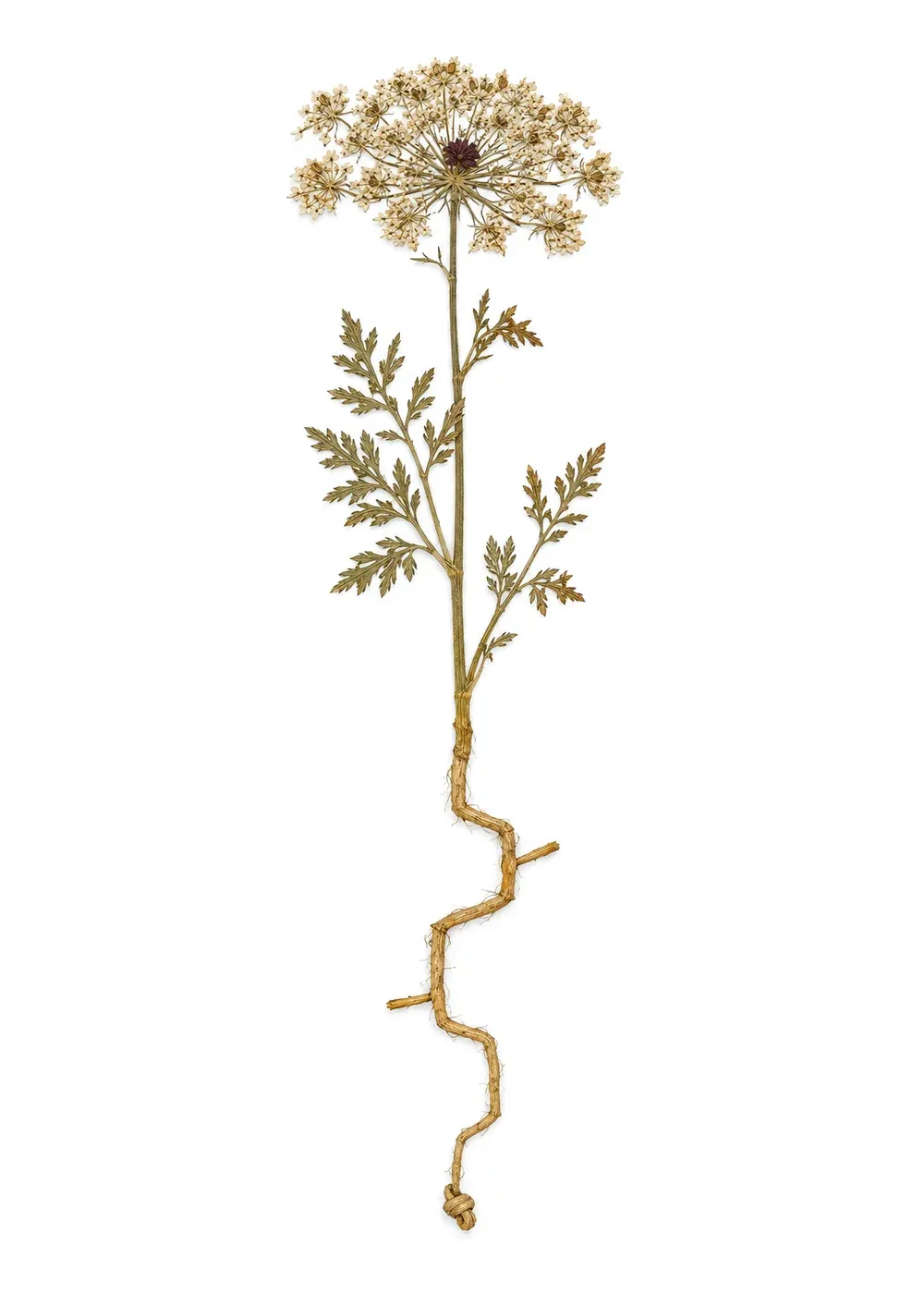
Cartographer's Root
Daucus itinerans
A wild carrot whose taproot grows in the exact shape of the route to wherever its seed was collected.
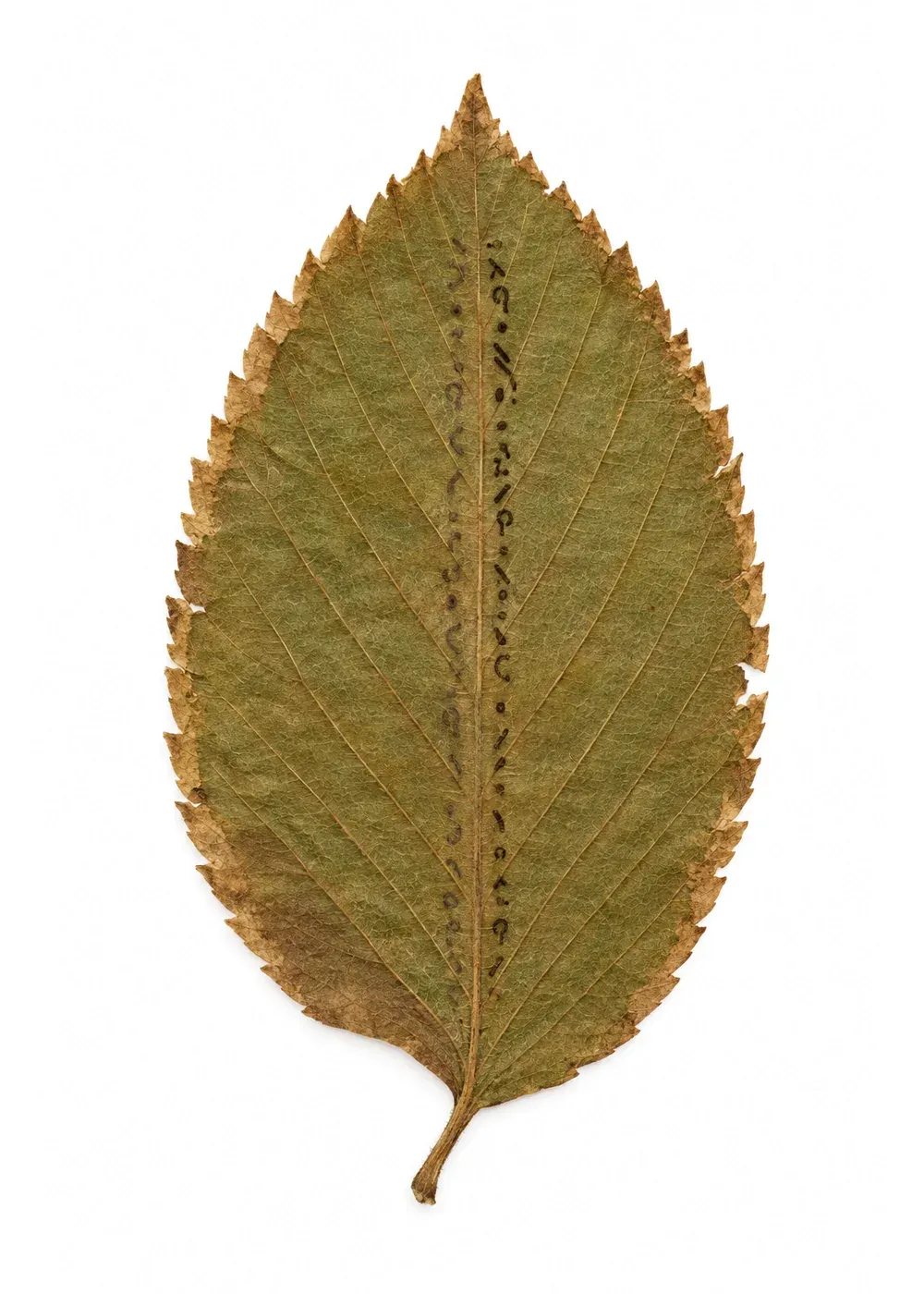
Hollow Elm
Ulmus testamenta
An elm whose growth rings record the last words spoken near it each year — and which has started recording words that have not been spoken yet.
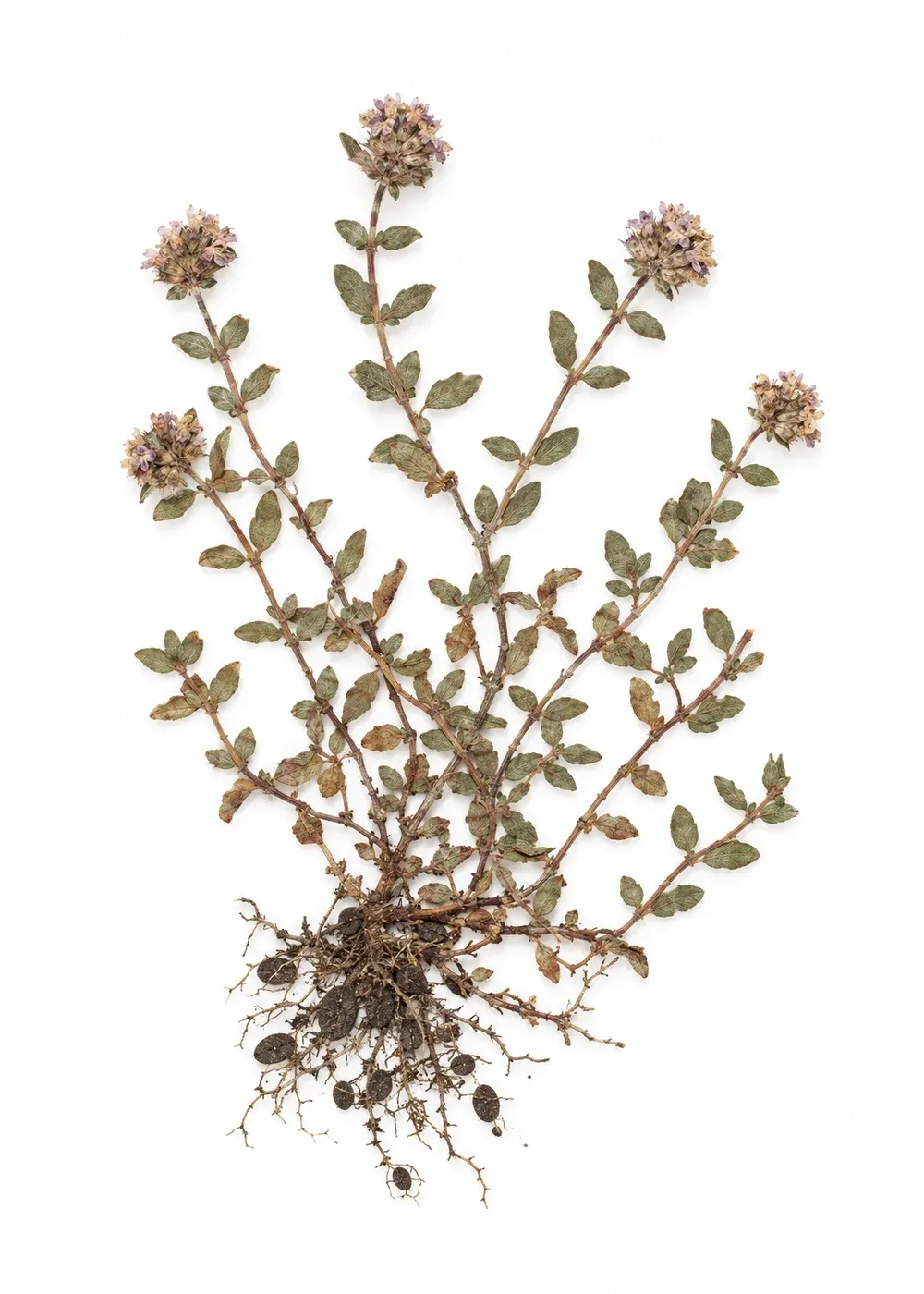
Bonded Thyme
Thymus pannonicus
A creeping thyme seized at the Serbian border weighs 31 grams to its owner and cannot be moved by anyone else until the paperwork is signed.