- No.
- H-0522
- Fam.
- Cactaceae
- Loc.
- Watch hut, Hoyvík landing, Streymoy
- Leg.
- Sámal Joensen, night watchman, October 1934
H-0522HerbariumCactaceae
Stranger's Cactus
Echinopsis peregrina
ArchivedIn 1933 a Hoyvík woman asked a court to declare her husband an impostor, though the harbour clerk, the town and his wage book all disagreed.
- Collected at
- Watch hut, Hoyvík landing, Streymoy
- Date
- October 1934
- Collector
- Sámal Joensen, night watchman
- Anomalies
- Emotional responseBureaucratic
Sequenced fragment
ATGGCTTCAAAGATTCCAGTGAACTTATCGAAATTTGCTCAAGGTTCACTGGAATCATTTGAAGCAATTATCTTCAAAGAGTTCTCTAAGTGA
Contents 6 sections
Description
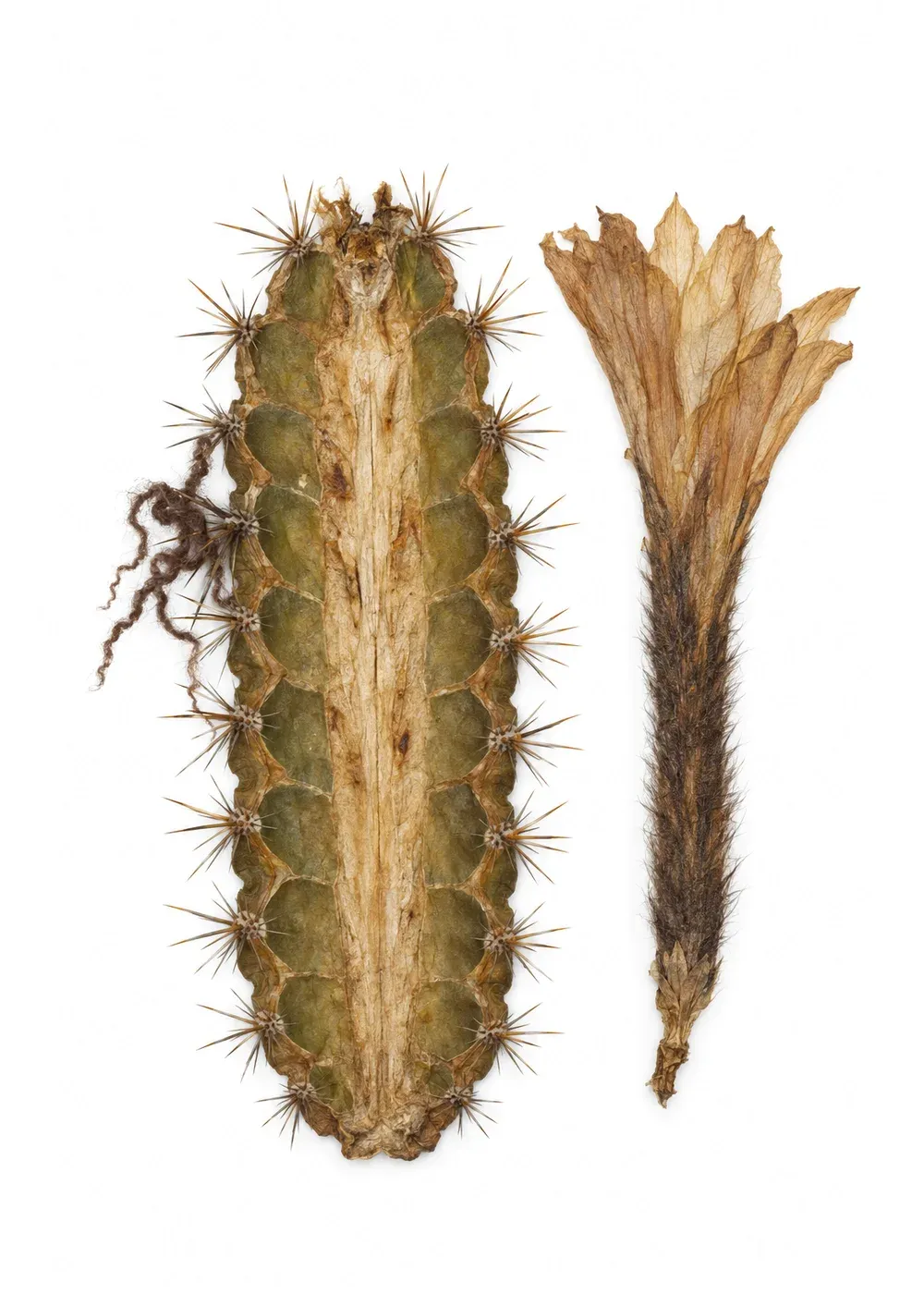
A single globose stem of Echinopsis, 14 cm tall and 9 cm across when collected, cut in half lengthwise and dried flat. It has twelve sharply notched ribs. The areoles are set about 1.2 cm apart, each with eight to ten radial spines and one central spine up to 2 cm long, dried amber to grey. There is one lateral flower, funnel-shaped and 16 cm long, with a hairy tube and petals that were white and have dried to parchment brown. The roots are trimmed. A shard of red earthenware pot is stored with the sheet.
Observations
When a person passes within about two metres of the living plant, the people closest to that person can no longer recognise them.
- The failure is complete and affects every sense: face, voice, walk, handwriting and smell.
- Those affected remember the person accurately and can describe him. They do not accept that the man in front of them is that person.
- Acquaintances, colleagues, officials and the general public are unaffected.
- Closeness here means daily intimacy, not blood. In the Hoyvík case the wife, the mother and the household dog were affected. A brother in Klaksvík, who saw him twice a year, was not.
- The man himself shows no change. A medical examination in Tórshavn in May 1933 found nothing.
- No case has ever reversed.
The file
Extracts from the record of the Sorenskriver’s court, Tórshavn, case 41/1933, Malena Mortensen v. Hanus Mortensen. Translated from the Danish for the Conservatory in 1935. The court clerk was Óli Jacobsen.
14 March 1933 — Petition
The petitioner, Malena Mortensen, née Hansen, of Hoyvík, states that her husband, Hanus Mortensen, boatman, left the Tórshavn landing on the evening of 2 February 1933 to walk home. She states that the man who came through her door at a quarter to midnight was not he.
He wore her husband’s gansey, which she knitted in the winter of 1929 and would know in the dark. He knew where the lamp oil is kept and which stair board is loose. He has the scar on the left thumb. She does not dispute any of this.
She asks the court to declare the man an impostor, to have him removed from the house, and to order a search for her husband.
28 March 1933 — Hearing, witnesses
Kristina Mortensen, widow, mother of Hanus Mortensen, stated: “I know my son’s scar. I put the stitches in it. I am looking at the scar and I do not know the hand.”
Petur Dahl, harbour clerk, stated that he recognised the respondent on sight on the morning of 3 February. He has paid him his wages every Saturday since then, as he did for the nine years before. The respondent’s signatures in the wage book were laid before the court beside entries from 1931, and the court finds them the same. The petitioner was shown both and said she could not say who had written either.
Sámal Joensen, night watchman at the Hoyvík landing, stated that the respondent stopped at the watch hut at about half past eleven on 2 February to ask for a match, and leaned in at the window to take it. A cactus stands on that sill. A Danish ship’s cook gave it to the witness in 1922. Asked why he mentioned it, the witness said the respondent’s sleeve had caught on it and he had had to unhook the wool.
28 March 1933 — The dog
At the petitioner’s request, Snati, the household’s nine-year-old black-and-white sheepdog, was brought into court and let loose at the door. The dog went to the petitioner and lay down, then went to Kristina Mortensen. It approached the respondent, smelled his hand and his boots, and returned to the petitioner. It stayed there, watching the door.
Asked whether he wished to say anything, the respondent said: “I have told her things only Hanus would know. She agrees that I know them. She says Hanus knew them too, and that is not the same thing.”
11 April 1933 — Ruling
The court has heard the harbour clerk, the parish priest, the respondent’s brother Jákup Mortensen of Klaksvík, and fourteen residents of Hoyvík and Tórshavn. All of them identify the respondent as Hanus Mortensen without hesitation, and the wage book agrees.
The court finds that the respondent is Hanus Mortensen and dismisses the petition. The court has no power to order a wife to know her husband. The marriage stands. Should either party apply for separation, the ordinary provisions apply. Costs are waived.
9 October 1934 — Memorandum appended to file
Added by the court clerk at the request of the Conservatory’s agent. Sámal Joensen surrendered the cactus from the Hoyvík watch hut today, and it has been crated for shipment. Mr Joensen stated that it has stood on the sill since 1922 and that he has passed it every night he has worked there.
Asked whether it had affected him, he said only that his sister in Kirkjubøur still writes to him at Christmas, and addresses the envelope to the Night Watchman, Hoyvík.
Genetic analysis
The specimen was sequenced in 2004 from tissue on the cut face of the stem. Overall GC content is 35.2%, which is normal for Cactaceae.
The fragment comes from the plant’s S-RNase gene. This gene belongs to the self-incompatibility system that many cacti use to reject their own pollen. Its job is to tell self from other.
The thirteen lowercase bases are the exact reverse complement of a thirteen-base stretch nineteen bases upstream (GATTCCAGTGAAC). That stretch sits in the hypervariable region that gives the plant its allele identity. So the plant carries the motif it uses to recognise itself, and the same motif again, turned to face the other way. Five resequencings between 2004 and 2019 agree.
No other Echinopsis examined carries the inversion. The Conservatory does not claim that it explains Hoyvík. It records only where it is.
Cultivation
Not cultivated. The plant arrived alive in November 1934. It was kept for six weeks in a closed room with a single door, then pressed on 19 December 1934 on the director’s instruction. During those weeks, only staff who were unmarried and had no living parents were rostered to enter. A gardener, Arthur Pell, volunteered on those grounds.
Joensen stated that he gave one offset to a ship’s cook in 1927. It has not been traced.
The sheet is kept in a cabinet at the end of the east corridor, where no one has to pass it on the way to anything else. Staff with spouses, children or dogs are asked not to fetch it themselves. No case has been attributed to the pressed specimen. The rule stands anyway.
Effects
The person who passes the plant loses nothing he can detect. The loss falls on the people around him, and each of them loses him alone, while everyone else contradicts them. Malena Mortensen was not believed by the town, the priest or the court. Every one of them was right, and so was she.
The Conservatory knows of two cases with certainty: Hanus Mortensen and Sámal Joensen.
Mortensen took a room above the net store in Tórshavn in May 1933 and went on working at the landing. Every Saturday he sent money to the house in Hoyvík. The receipts in the file are signed by Malena Mortensen, who never sent the money back. Snati was seen most evenings that summer sitting outside the net store, some yards from the door.
Filed alongside
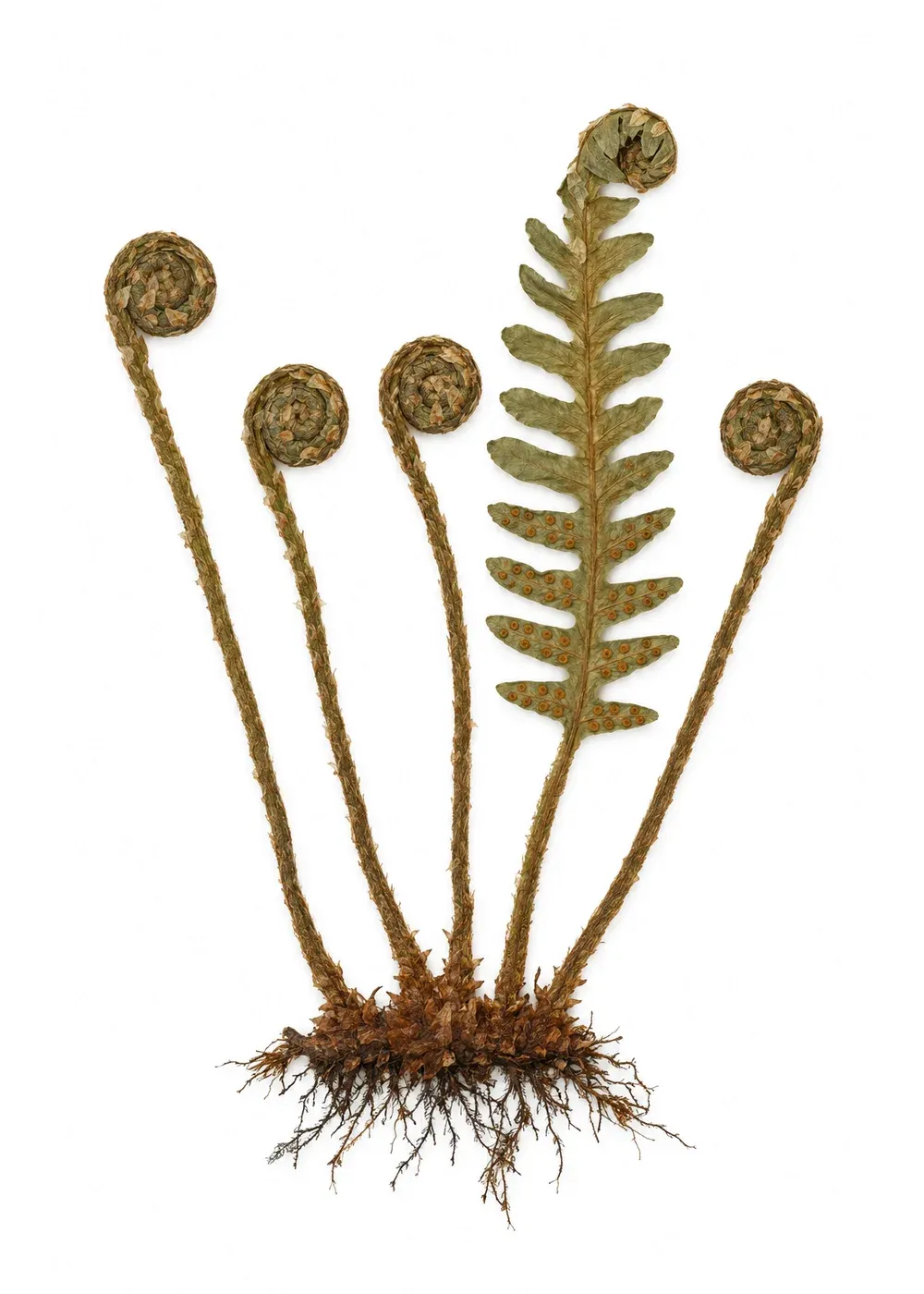
Widow's Fern
Polypodium memorans
An ordinary fern whose fronds uncurl only near the recently bereaved — and whose genome remembers who was lost.
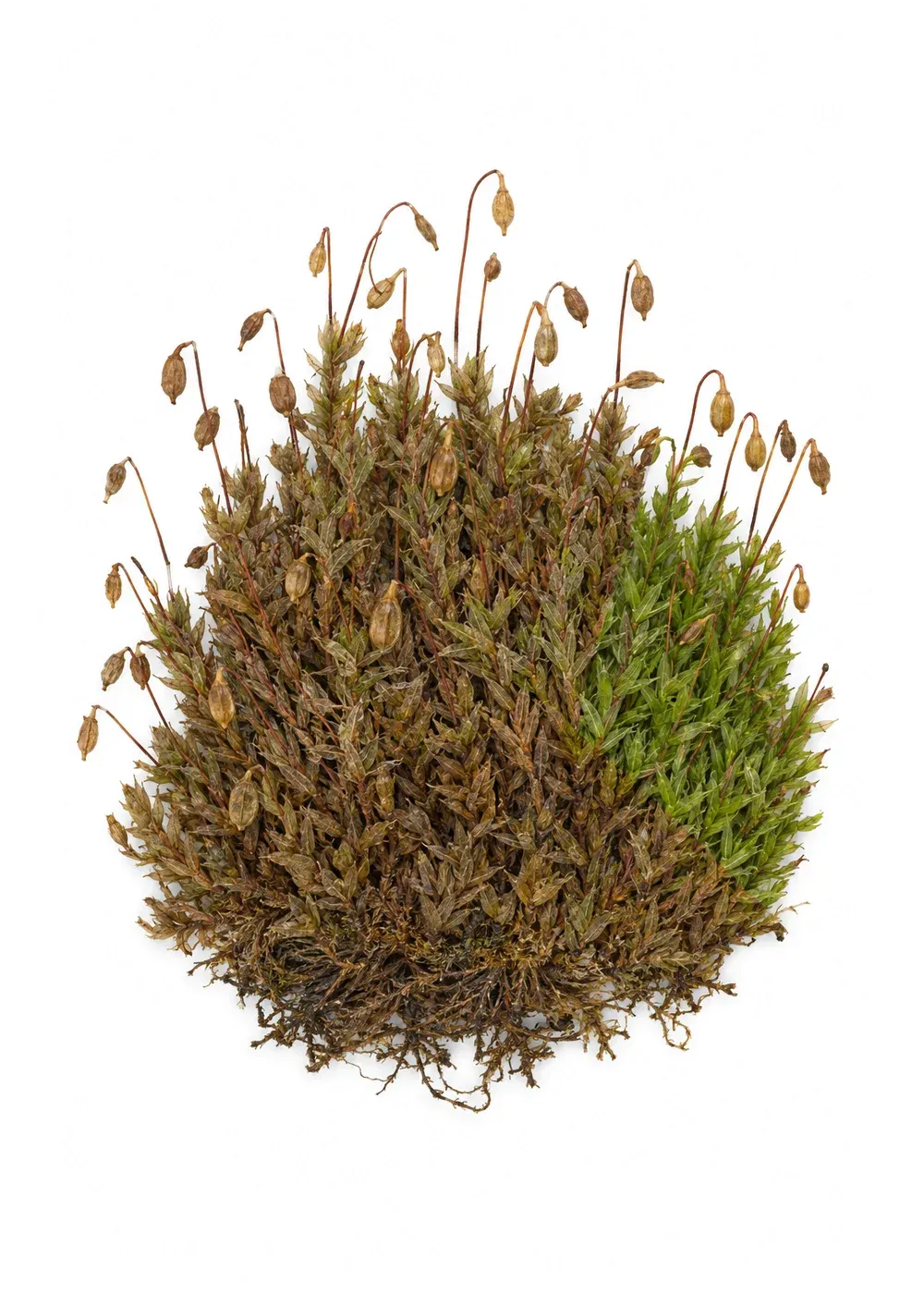
Lamplighter's Moss
Bryum vesperale
A cushion moss that photosynthesises from attention rather than light, and dies in rooms nobody visits.
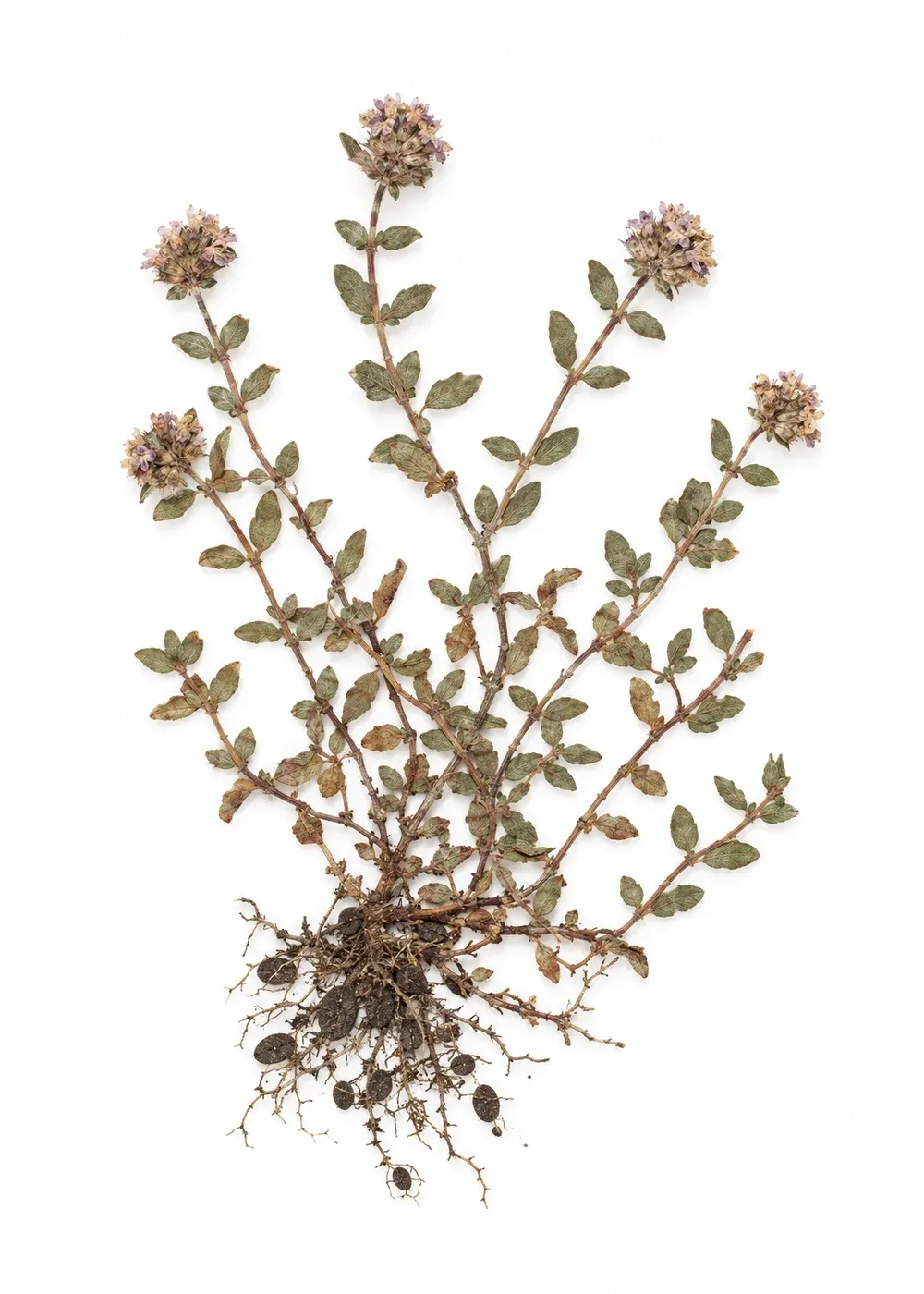
Bonded Thyme
Thymus pannonicus
A creeping thyme seized at the Serbian border weighs 31 grams to its owner and cannot be moved by anyone else until the paperwork is signed.