- No.
- H-0520
- Fam.
- Ulmaceae
- Loc.
- Former parish green, Slavonice
- Leg.
- The Slavonice expedition (Dr. J. Vodička, leader), 1926
H-0520HerbariumUlmaceae
Hollow Elm
Ulmus testamenta
ArchivedAn elm whose growth rings record the last words spoken near it each year — and which has started recording words that have not been spoken yet.
- Collected at
- Former parish green, Slavonice
- Date
- 1926
- Collector
- The Slavonice expedition (Dr. J. Vodička, leader)
Sequenced fragment
TTAGCCGATCGGATTACGCTAGATCGGATTACGCTAGCATCGGATTAGCCGATCGTAGCATCGATTAGC
Contents 6 sections
Description
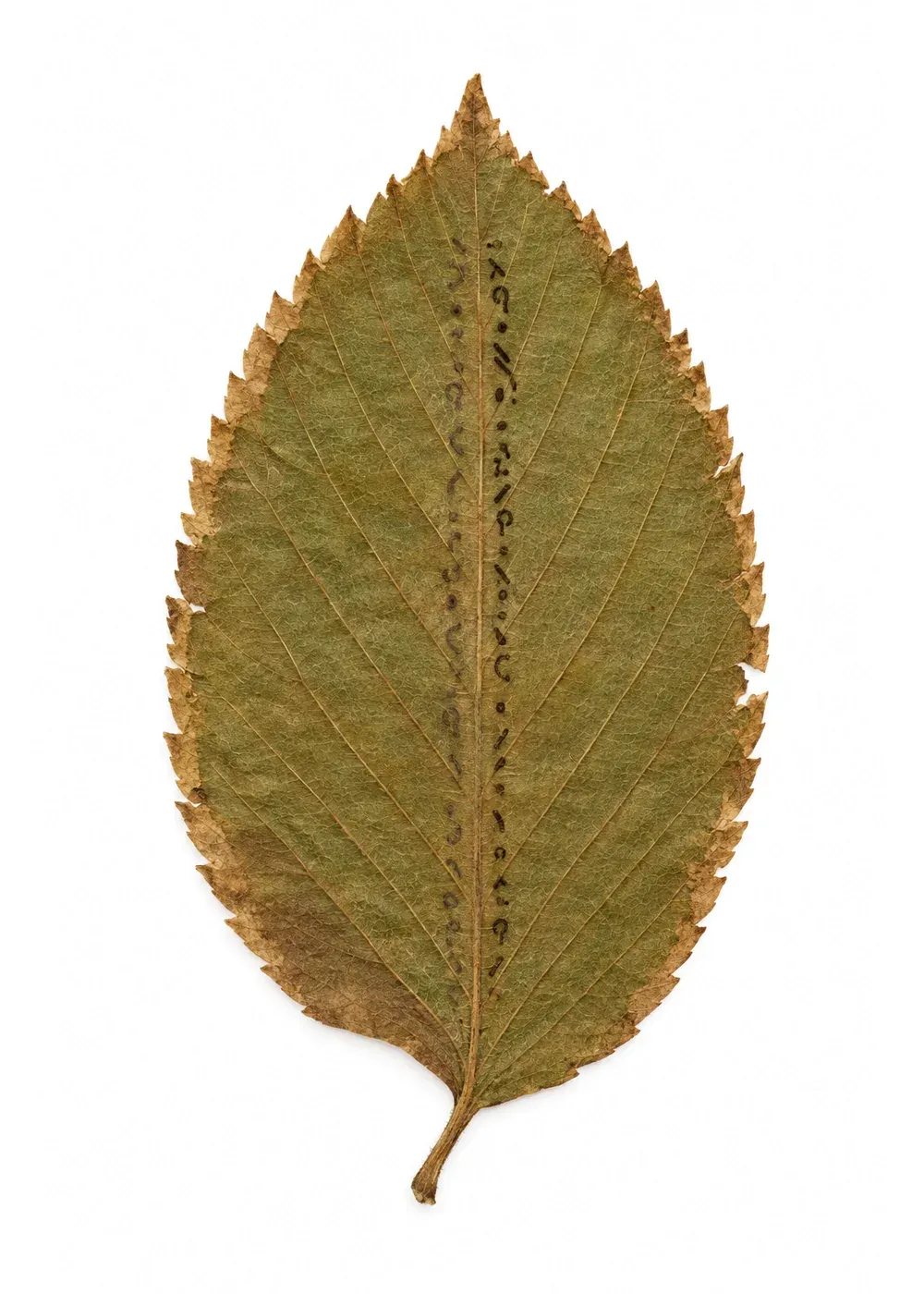
A field elm, Ulmus minor, held as three items: a pressed leafy shoot with five alternate, oval, double-toothed leaves with lopsided bases, dried olive-brown (H-0520/a); a transverse section of trunk 41 cm across (H-0520/b); and a ledger of transcriptions kept between 1926 and 2003 (H-0520/c). The tree stood on the parish green at Slavonice until it was felled in 2003.
Observations
Bark
Grey-brown, deeply furrowed, unremarkable for a field elm of its estimated age (c. 230 years at felling). Rubbings of the bark taken in 1958 show faint, regular cross-hatching between the furrows that does not appear in photographs, only in rubbings.
Leaves
Asymmetric at the base, double-toothed, typical of Ulmus minor. Pressed leaves from the tree darken along the midrib within a week of pressing, in a pattern resembling a line of handwriting seen from too far away to read. The pressed sheet in the Herbarium has darkened twice since 1926: once in 1958, and once in March of last year.
The hollow
The trunk was hollow from roughly a metre above ground to the first major fork. Children on the green used it as a hiding place for most of the nineteenth century. The interior wall of the hollow was smooth, almost polished, and warmer than the outside air by about two degrees in every season measured.
The file
This is the longest file in the Herbarium. Readers looking for a single sentence should read the summary on the catalog card; readers looking for the reason the Ministry wrote to us should begin at the incident log.
1926: the Slavonice expedition
Dr. Vodička’s expedition came to Slavonice to collect a different specimen entirely (a moss, since lost). The parish priest asked them, informally, to “look at the elm, because it says things”. The expedition pressed a leaf, took a rubbing, and recorded in the ledger that “the tree does not say anything; the priest is tired”. The ledger continues, in the same hand, eight days later: “The tree says things.”
1958: the re-survey
The Institute returned with a coring drill and a sequencing budget it would not see again for thirty years. The re-survey established the ring insertions and the decoding table. It also began the practice, maintained until 2003, of a curator visiting the green once a year to sit inside the hollow for an hour and say nothing.
2003: the felling
A storm split the first fork in 2002 and the municipality judged the tree unsafe. The Institute was permitted to take a section of the trunk before the rest was removed. The section in the Herbarium is from just below the hollow; its outermost rings run to the autumn of 2002.
Incident log
- 1926 — Expedition ledger begins. See collection history.
- 1958 — Re-survey decodes the ring insertions. The pressed leaf sheet darkens along the midrib.
- 1974 — A visiting researcher reads every decoded phrase from the ledger aloud, in order, in the Herbarium reading room. The section is found to be several degrees warmer than the room for the following week.
- 1990 — First outer ring with an insertion that matches nothing said on the green.
- 2003 — Felling. Section taken. Ledger closed.
- Last March — Without any new sequencing having been done, the pressed leaf sheet darkens a second time. The new marks do not match the 1958 marks. The Ministry letter follows within the month.
Addendum: the Ministry letter
The letter is short, polite, and asks that the Institute “refrain from further decoding of material originating from specimen H-0520, in the interest of public calm”. It does not say how the Ministry knew that further decoding had taken place, because officially it had not. It is filed in the ledger, after the last transcription, in the space where the next one would go.
Genetic analysis
Ring sequencing
In 1958, a re-survey team cored the trunk and sequenced cambium from individual growth rings — an unusual and, at the time, extremely laborious procedure. Each ring carried a short non-coding insertion, between 40 and 300 base pairs long, absent from neighbouring elms.
Read as base four and mapped to letters using the simplest possible table, each insertion decodes to a short phrase in Czech. The 1958 team matched eleven of these phrases against parish records and oral testimony: each was among the last things said aloud on the green in the year that ring was laid down.
The repeating fragment
The outermost rings, from roughly 1990 onwards, carry insertions that do not decode to anything said on the green. They decode to phrases with no known speaker. Each year’s insertion is the previous year’s, shifted by one base, as though a longer sentence were being typed one letter at a time.
If the shift continues at the same rate, the full sentence would have been complete within the tree’s lifetime by about 2030.
Cultivation
The tree has never been successfully propagated. Cuttings root, grow normally for a season, and then stop growing without dying — leaves on, sap moving, no new wood. Eleven such cuttings stood in the north bay of the Glasshouse until 1997 and were moved to storage when visitors began to report that the room felt “like waiting for someone to finish a sentence”.
Effects
On visitors
Most visitors to the trunk section in the Herbarium report nothing at all. A minority report the strong impression of having been about to say something important and having forgotten it. This passes within minutes.
On staff
Staff who work regularly with the section report a tendency to choose their last words of the day carefully. This was noticed in the 1960s and has never been formally studied, on the grounds that nobody wished to be the one to study it.
Filed alongside
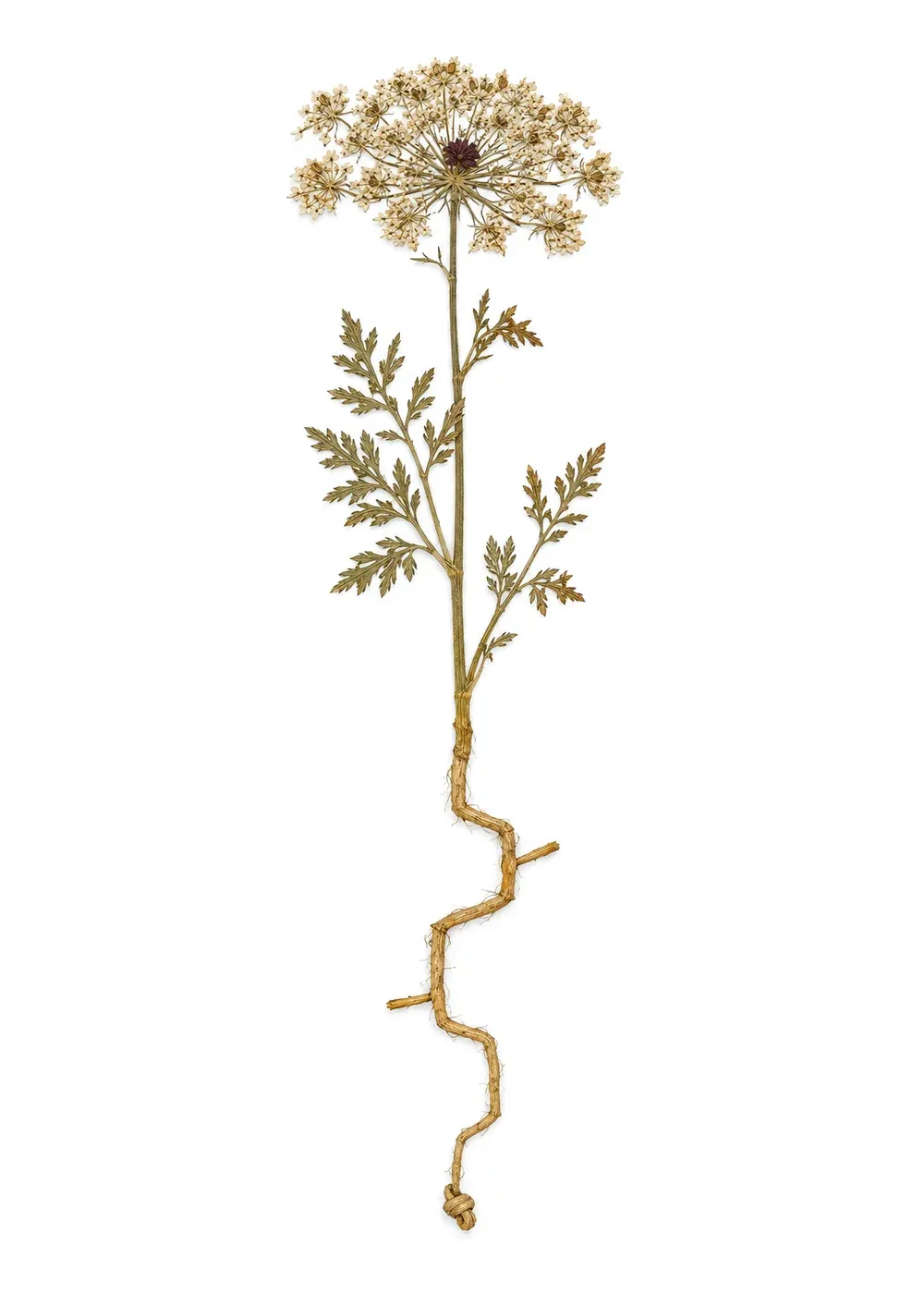
Cartographer's Root
Daucus itinerans
A wild carrot whose taproot grows in the exact shape of the route to wherever its seed was collected.
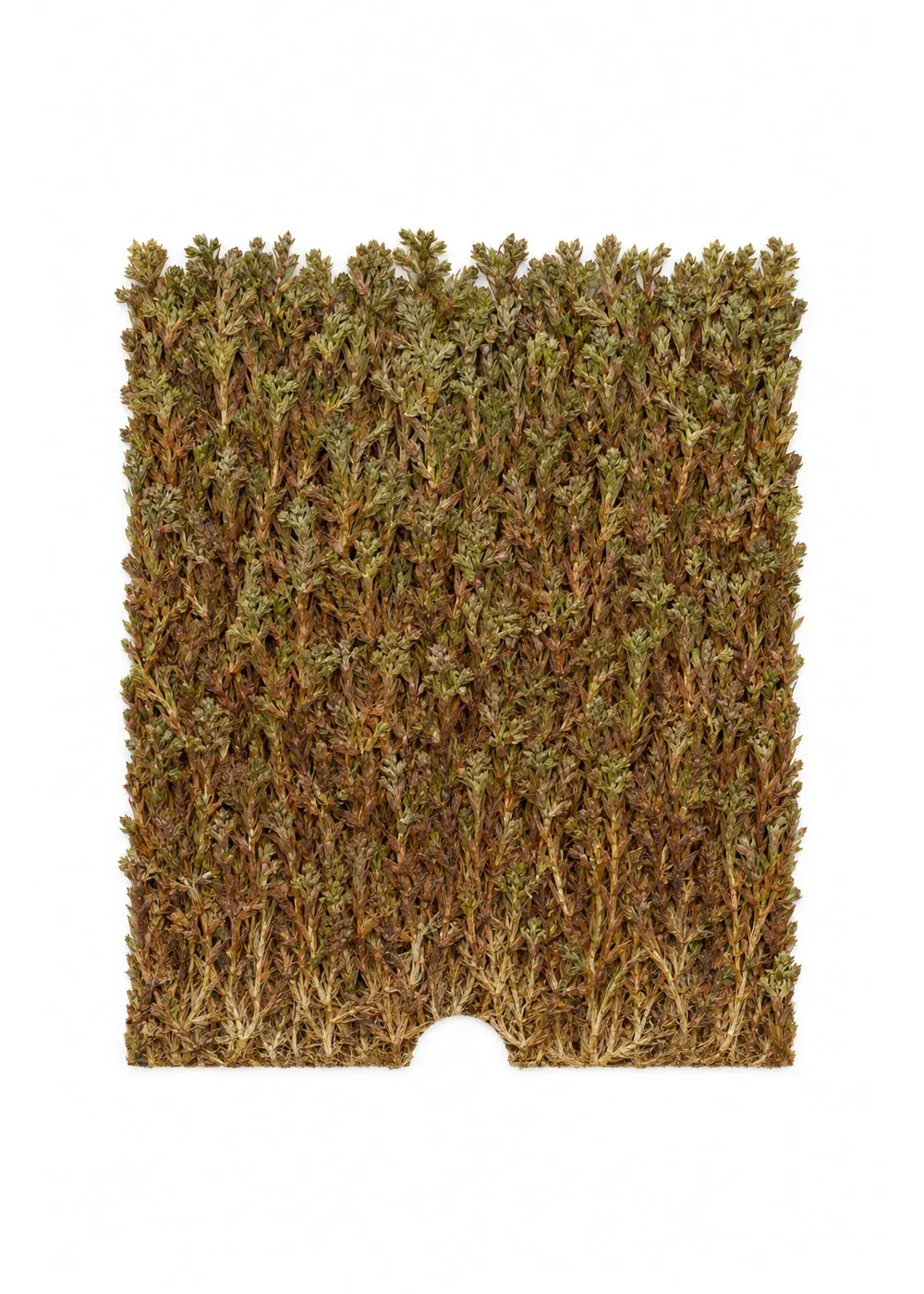
Index Moss
Sphagnum catalogi
A moss that grew over the old card catalog and now writes new cards — for specimens the Institute has not collected yet.
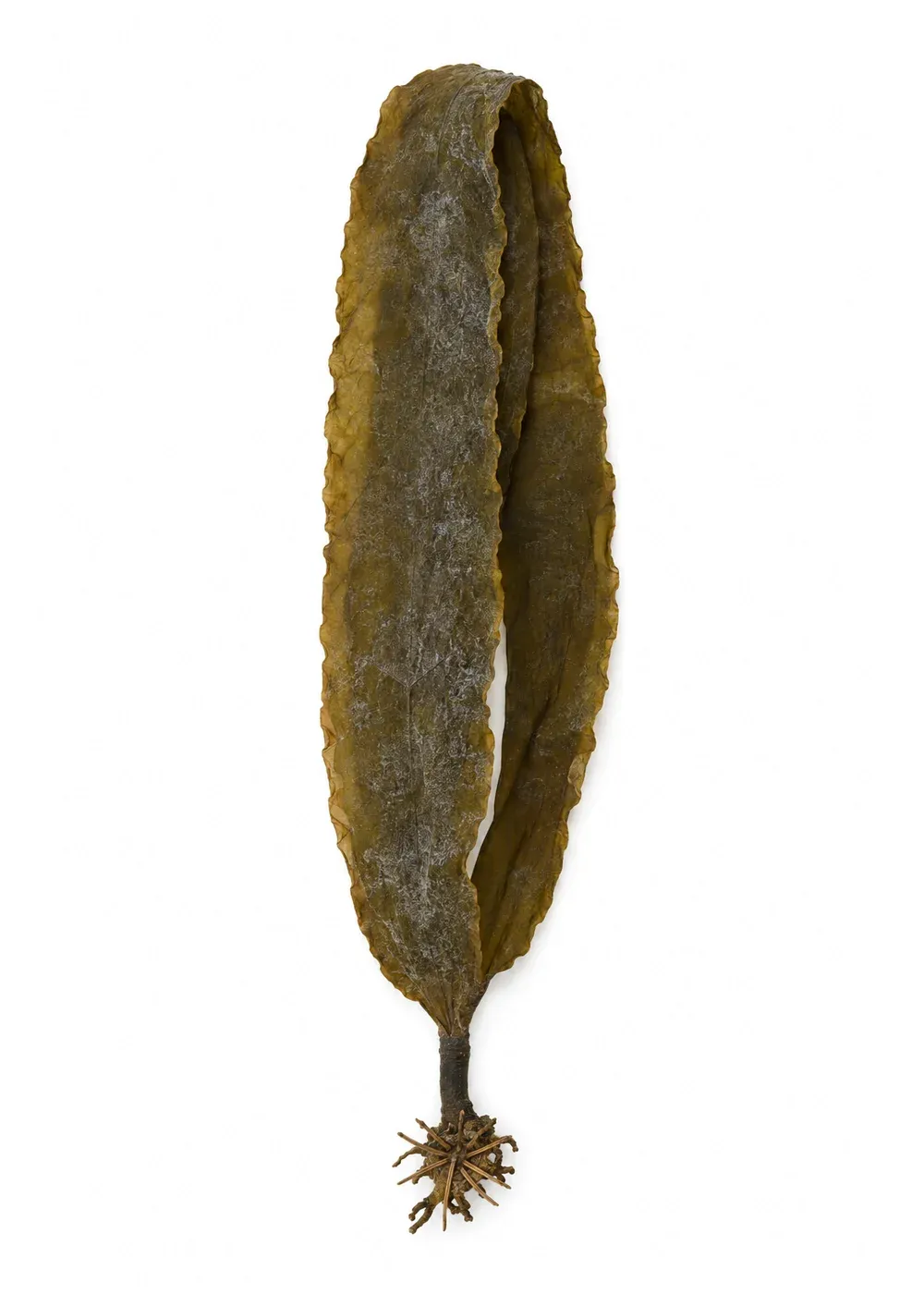
Shubin's Ribbon
Laminaria famae
A kelp found in Siberian larch forest in 1887, and an auctioneer who acquired a limp the same week he wrote to deny it.