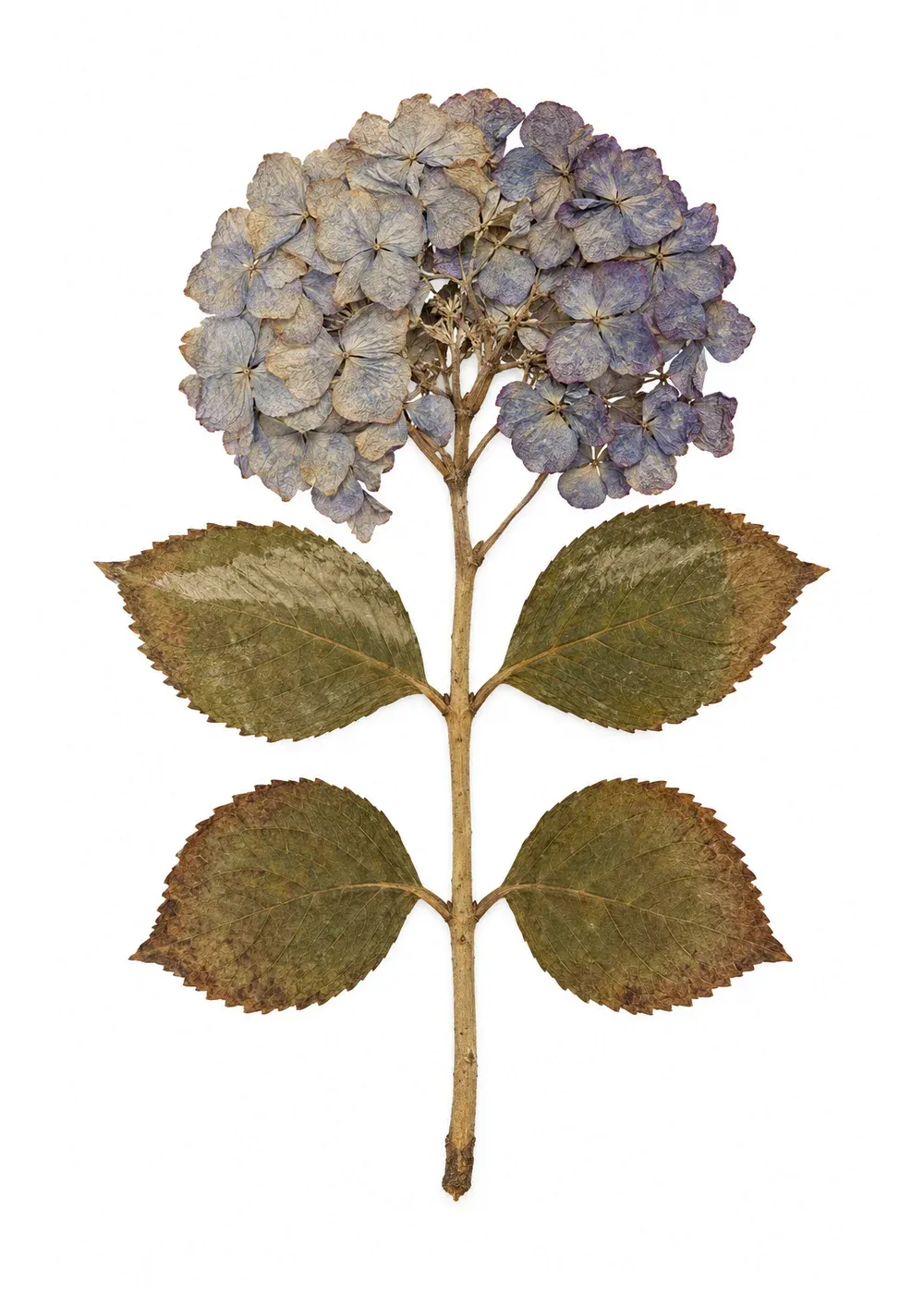
- No.
- G-0214
- Fam.
- Hydrangeaceae
- Loc.
- Capelo, Faial, Azores
- Leg.
- Manuel Silveira, gravedigger, 1958
G-0214GlasshouseHydrangeaceae
Unheard-Hour Hortênsia
Hydrangea macrophylla
Under cultivationWalk the full 31 metres of this Penzance hydrangea hedge and no one can hear you for an hour, as a neighbour did at two in the morning in March 1971.
- Collected at
- Capelo, Faial, Azores
- Date
- 1958
- Collector
- Manuel Silveira, gravedigger
- Anomalies
- AcousticHuman DNA
Sequenced fragment
ATGGCTTCAAGGTTCGAACTTGGAGCAAGTCTTCCCTGCAGGTCCTCGTAGAAGATGCCGGTTAACGTCATCGGAGATTTGCAAGGTCTAACG
Contents 6 sections
Description
A hedge of Hydrangea macrophylla: 22 plants in a single row 31.0 m long on the north walk of the Glasshouse. The plants stand 1.4–1.7 m tall, multi-stemmed and deciduous. The leaves are opposite, broadly ovate, 12–18 cm long, coarsely serrate and glossy mid-green. Flowers are borne in mophead corymbs up to 20 cm across, made of sterile florets with four broad sepals. On acid soil they are a clear mid-blue, fading to green-violet by October.
Observations
Anyone who walks the whole length of the hedge, end post to end post, in either direction, cannot be heard by anyone else for 60 minutes from the moment they pass the last plant. Their voice and footsteps reach no other listener, human or animal, and neither does any sound made by things they carry or handle: a dropped tray, a door, a case on gravel. The walker hears themselves normally. Microphones record them normally. Walking 30 m, or turning back at any point, does nothing. Over 41 timed trials the hour has measured 60 min 00 s, ±1 s.
The file
The hedge came to the Glasshouse in March 2004, lifted whole from the front garden of 10 Polwithen Road, Penzance, with a file from the executor’s solicitor, who asked that the inventory be read “as a list of contents, and no more”. His pencil margin notes are transcribed; one, erased, was recovered under raking light and is given in square brackets.
Inventory of contents, 10 Polwithen Road
Inventory of the estate of Mrs Edna May Treloar, taken 3 February 2004 — D. J. Nance, Nance & Rowe, solicitors
Taken in the presence of the executor, Mrs Carol Bray (niece).
The hall
- Barometer, oak, aneroid; reads Change. £40.
- Coat hooks, brass (six). On them: a gentleman’s mackintosh (the late Mr H. Treloar); a headscarf; a leather dog lead (no dog kept at the property, per executor).
- One brass cylinder key on a loop of green wool, with a card ticket in the deceased’s hand: J. — in case. Tried in every lock on the premises; it fits none. Nil value. Retained by executor.
Margin, pencil: [No. 12 — lock changed the week after. Per R.P. at the door, 2.40 p.m.]
The front parlour
- Bureau, mahogany. Contents: household papers, and three school essays numbered in a teacher’s hand and tied with tape (see attached).
- Photograph, framed: staff of the cable station at Horta, 23 men on steps. The late Mr Treloar is in the second row, fourth from left.
- Section of submarine cable, brass-capped, used as a doorstop. £15.
The box room
- Set of three graduated leather cases, tan, initialled E.M.T. Only the smallest is present. The two larger are not in the house.
Margin: Executor confirms these were not lost from the estate. No further entry required.
The front garden
- Hedge of hydrangea, 22 plants, running along the front and side of the property from the front gate to the side gate; measured at 31.0 m. Blue. Grown by the late Mr Treloar from a cutting he brought from the Azores.
- Terracotta pot, empty, standing on the path at the 27th metre. Not to be moved (executor).
- No valuation. The family have offered the hedge to the Conservatory, which will lift it whole.
Margin: Family ask that the hedge be described as a hedge.
Essays from the visit to Mrs Treloar’s garden
Three essays from a class visit, June 1971, found in Mrs Treloar’s bureau — comments by the teacher, Miss R. Hosking
Transcribed by D. J. Nance; spelling corrected.
The longest hedge in Penzance, by Michael
Mrs Treloar’s hedge is 31 metres long, which is the new way, and it is blue all the way along. She says blue means the soil is sour. We were allowed to walk along it as far as the flowerpot and not one step more, and then we had to come back on the pavement side. Gary asked why and she said because she said so.
Good measuring, Michael. 7/10.
Mrs Treloar’s hortensia, by Susan
Mr Treloar worked on the telegraph on an island called Faial. The hedges there go along all the roads and round the graveyard. The man who digs the graves, Manuel, gave him a piece in a tin and said it was for people who need to go quietly. Mrs Treloar says that is because of the graveyard. Hortensia is the Portuguese name.
Interesting, Susan, but hydrangea is the correct name. 8/10.
The quiet hedge, by Tamsin
I like the hedge best because it is quiet. We live at No. 14. Bran at No. 12 barks at the milkman and the wind and me. I remember the night Mrs Pascoe went past and the dog didn’t bark at all. It was two o’clock by my clock and she had two cases. Mrs Treloar was holding the side gate. Mrs Pascoe said something to her, I saw her mouth go, but there wasn’t anything. Then they walked to the end of the road and I went back to bed.
Tamsin, please keep to the plant. We do not write about neighbours’ business. 5/10.
Genetic analysis
Diploid H. macrophylla (2n = 36), a mophead type consistent with Azorean roadside stock. All 22 plants carry the same 24-base insertion in an intron, shown in lowercase. It has no match in any plant, fungal or bacterial database. Twenty-two of its 24 bases match the reverse complement of a stretch of human OTOF, which encodes otoferlin, the protein inner-ear hair cells need to pass sound to the auditory nerve. The insert is not present in 14 hortênsias sampled along the Capelo road in 2005, all of them replanted after the Capelinhos eruption of 1957–58. It is also absent from the Conservatory’s own 31 m row of rooted cuttings.
Cultivation
The hedge grows on the north walk in ericaceous loam, with aluminium sulphate added each spring to keep it blue. It flowers on old wood and is pruned only in March.
Cuttings root easily. In 2009 a second row of 31.0 m was raised from softwood cuttings, and nothing happens to people who walk it. The effect belongs to these 22 plants.
The gardeners deadhead from inside the beds and never along the path. Mrs Treloar’s terracotta pot still stands at the 27th metre, with a rope beside it. Anyone may ask to walk the full length. The Keeper considers each request in person. Three have been granted since 2004, and the reasons were not recorded.
Effects
For the hour, a walker may shout, drop a tray or slam a door beside someone, and that person will not turn round. Dogs do not react. On the telephone the other caller hears an open line. Walkers say the hardest part is that they can still hear themselves perfectly.
The hour ends to the second. In 2011 a propagator was talking to a colleague when it ran out, and the colleague heard the second half of her sentence and none of the first.
In Polwithen Road the side gate of No. 10 was left off its latch for thirty-three years. The present owners keep it so, though no one has told them why.
In 2004 Mr R. Pascoe wrote to ask whether the hedge could be visited. He was told that it could. He has not come.
Filed alongside
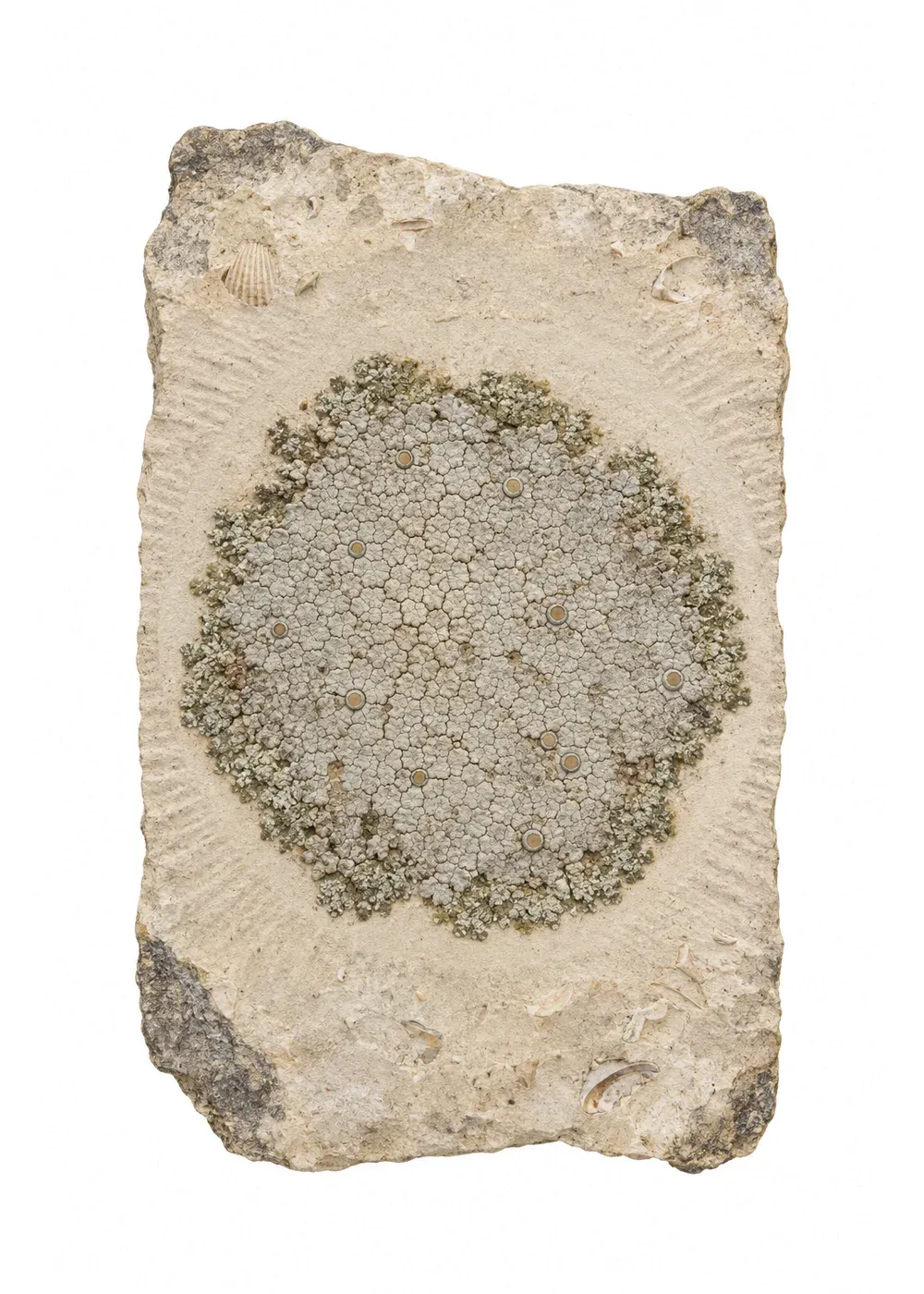
Quiet Crust
Lecanora liminis
A grey doorstep lichen from Mansourah that keeps a circle of perfect silence around itself, 2 mm wider every year.
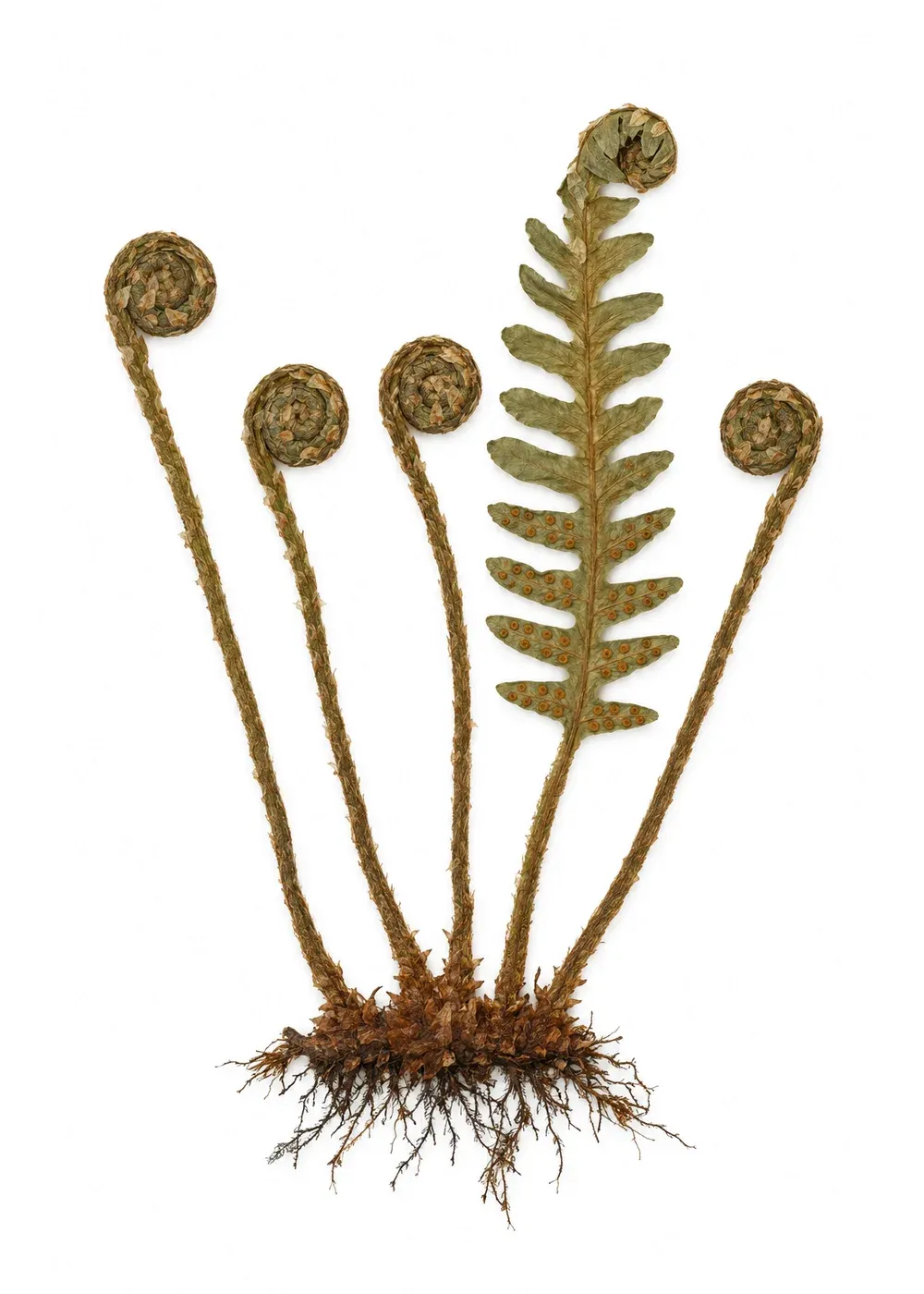
Widow's Fern
Polypodium memorans
An ordinary fern whose fronds uncurl only near the recently bereaved — and whose genome remembers who was lost.
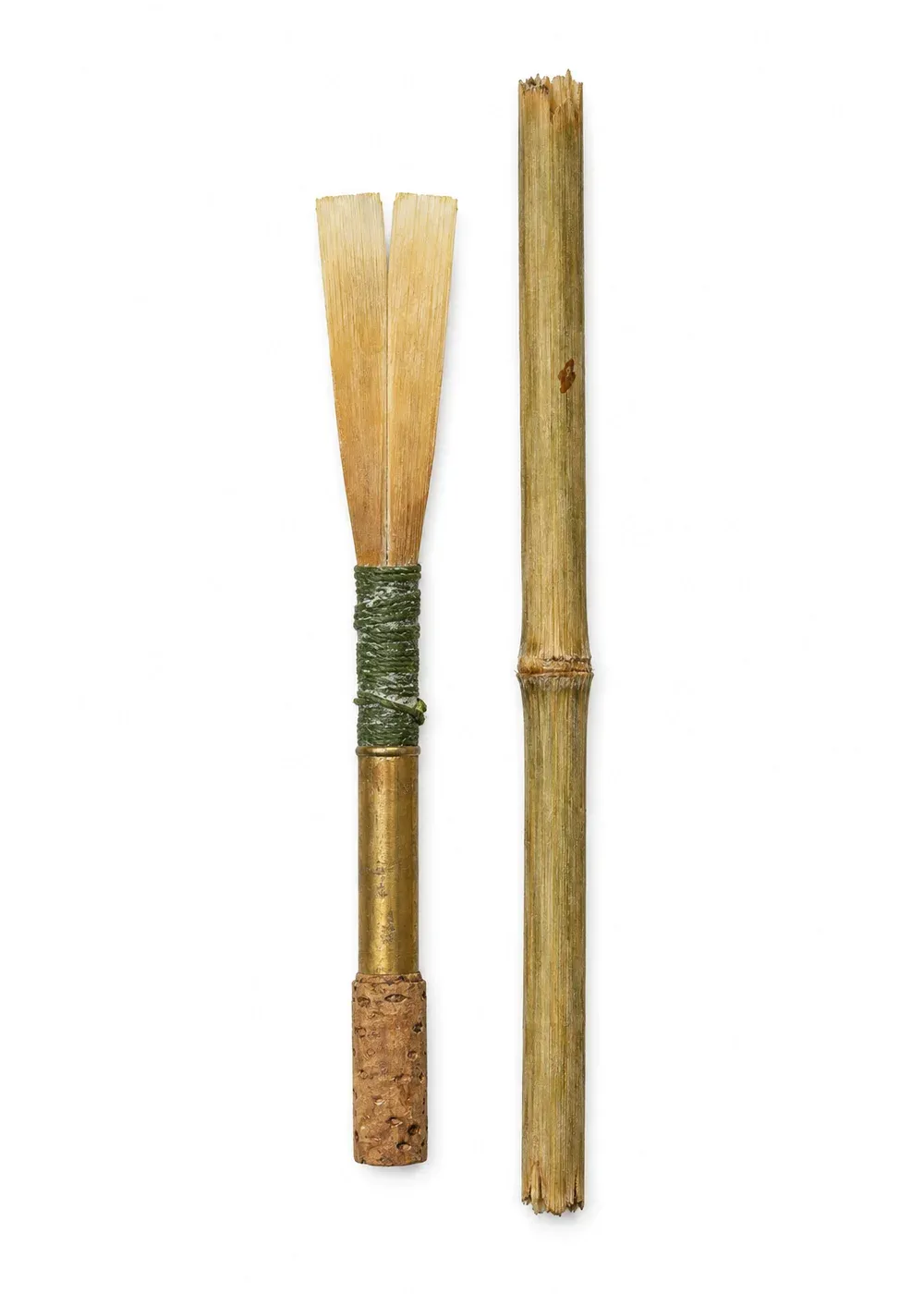
Threshold Oboe-Cane
Arundo donax
An oboe reed cut from Vukovar cane is silent except in doorways, and its maker listed 37 of them and sealed a 38th in a footnote.