- No.
- H-0529
- Fam.
- Fabaceae
- Loc.
- Yazoo River levee, Yazoo City, Mississippi
- Leg.
- Abraham Ledbetter, clockmaker, July 1915
H-0529HerbariumFabaceae
Expected-Value Indigo
Amorpha fruticosa
ArchivedA false indigo pressed in 1915 keeps the sky over it at the average: 0.14 inches of rain a day at Yazoo City for seventy-six years.
- Collected at
- Yazoo River levee, Yazoo City, Mississippi
- Date
- July 1915
- Collector
- Abraham Ledbetter, clockmaker
- Anomalies
- MeteorologicalNumerical
Sequenced fragment
ATGGCTTCAAGTTTGCTCAAGGAATCTTCAGTTAAGTCGACGTACGTACGTACGTACGTACGTGATCTTGAAACCATTGGTTCAAGAG
Contents 6 sections
Description
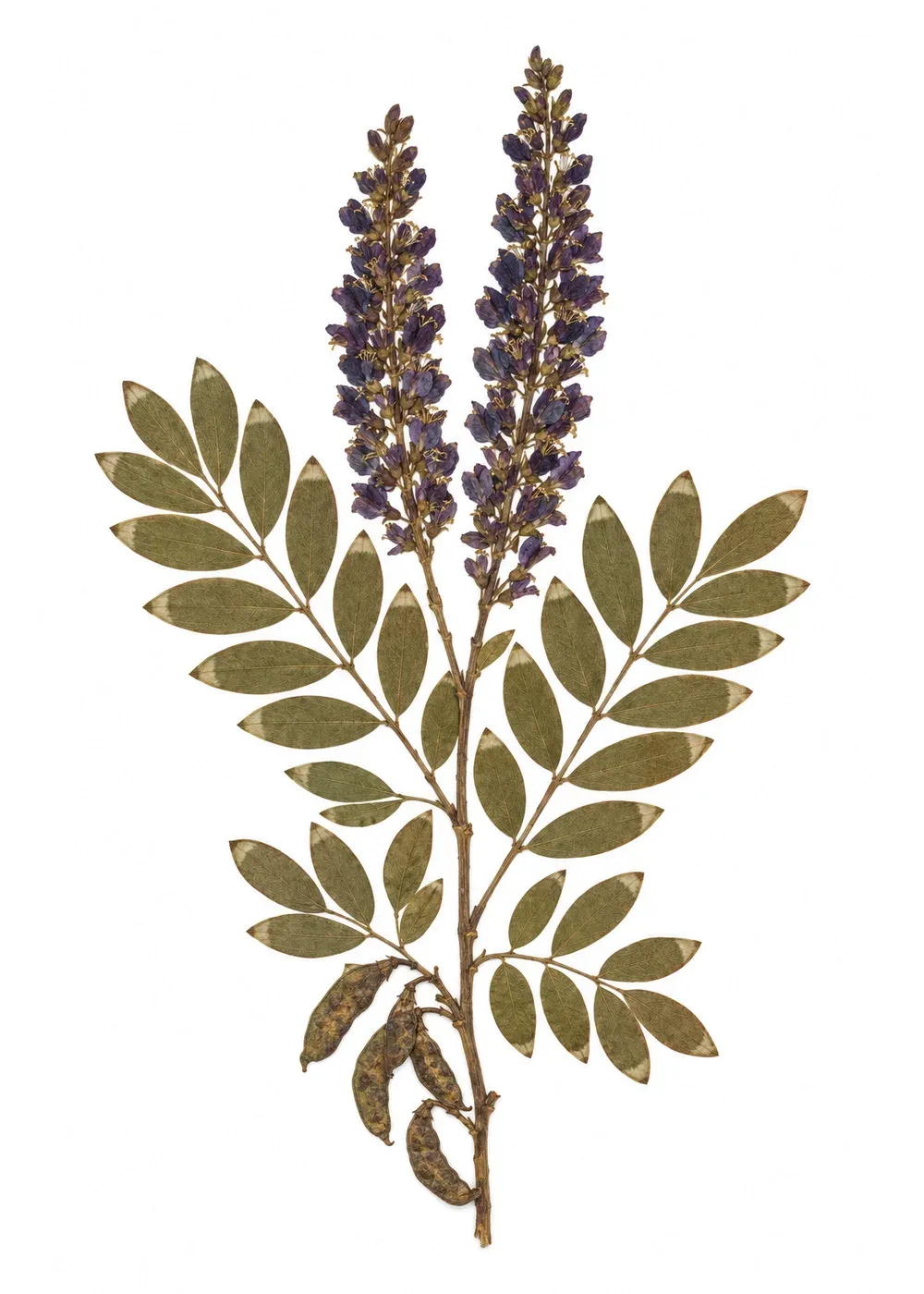
A pressed flowering branch tip of false indigo, Amorpha fruticosa, 41 cm long. Seven alternate, odd-pinnate leaves each carry 13–17 elliptic leaflets 2–3.5 cm long, finely gland-dotted beneath and dried olive-brown. Two terminal spike-like racemes, 9 and 12 cm long, are crowded with small flowers. Each flower has a single violet petal wrapped round orange anthers that stick out past it, now dried to deep purple and dull gold. Four short, curved, warty pods sit near the base, each holding one seed. The original label is in iron-gall ink.
Observations
Within about 280 m of the sheet, the weather is the long-run mean for that calendar date at that place, and nothing else. Rain falls as a fine drizzle at a constant rate. At Yazoo City this came to 0.14 in (3.6 mm) in every twenty-four hours from 1915 to 1991. Temperature follows the normal hourly curve for the date to within 0.5 °F. Cloud cover stays at five tenths, and the wind stays at its mean speed and direction. Every measured quantity has zero variance. Since the sheet was accessioned, the roof gauge above Cabinet 14 has read the local daily mean, 2.1 mm, every morning.
The file
The sheet came to the Conservatory in 2005 from the Yazoo City Drainage District. The papers followed in 2019 from Ruth Ledbetter Pryor, the clockmaker’s great-granddaughter. Her pencil notes are in square brackets. Her father’s letter to the board is not among them. On the folder she wrote: He never kept copies. This is what they said back.
Sale 41 — The Ledbetter workshop, Yazoo City
Greenwood sale catalogue, spring 1991, annotated by Ruth Ledbetter Pryor
Moorhead & Tull, Greenwood. The property of a Yazoo City family, sold without reserve.
Lot 113 — Pressed sheet, the dependable shrub
False indigo on a single sheet, with the collector’s label in ink: Amorpha. Levee below Brickyard Landing, July 1915. Rains the same.
Offered with the family’s account, without warranty. The shrub stood on the levee above Mr Odom’s forty acres of cotton, which rotted in the boll two seasons running. The levee board grubbed it out in 1916. Since then, the vendor states, the sheet has kept the average weather for the day: fourteen hundredths of an inch of rain in every twenty-four hours, falling evenly. In seventy-six years the house has had no storm, no frost and no dry Monday. Commissioners of drainage boards may wish to view. Est. $200–400.
[It wasn’t dependable. It was the same. Those are different things.]
Lot 114 — Observer’s day-books and brass gauge
Seventy-six bound day-books: the cooperative rainfall record kept at the Ledbetter house for the Weather Bureau and its successors. Every entry examined reads .14. Sold with the brass gauge. Est. $100–150.
[Great-grandpa, then Granddad Amos, then Dad. Dad phoned the figure through to the radio station every morning. This lot didn’t sell. The gauge went back in the yard.]
Conditions of sale
The auctioneers make no representation as to the climate of any lot. Lot 113 is to be removed on the day of sale.
[It drizzled on the Gallery car park all through viewing. Selling it was Mum’s idea. She wanted to hang the washing out once.]
Drainage District — Board of Commissioners
Minutes extract sent to Wendell Ledbetter, summer 1991; kept by Ruth Ledbetter Pryor
Present: J. T. Haskins (President), C. Ferrell, O. D. Mabry; L. Crump, superintendent; Mrs E. Tidwell, secretary.
Item 3 — Fifteenth Street drain
The superintendent reported 4.6 in. of rain in nineteen hours on 2–3 June at the Ledbetter gauge, the first reading other than .14 in its record. The Fifteenth Street culvert, sized in 1958 on the Yazoo City record, overtopped, and eleven houses took water. Mr Mabry asked what allowance had been made for storms. The superintendent said none, as the record showed none.
Item 5 — Correspondence, Mr W. Ledbetter
The secretary read a letter of 6 June from Mr Wendell Ledbetter of Canal Street, with a cassette. At the writer’s request it is not copied into the minutes. Resolved that this extract be sent as the Board’s reply:
- The Board accepts that the readings from 1915 to April 1991 describe the weather over one pressed sheet, not the weather of Yazoo City.
- The readings were taken correctly. The Board holds no member of the family responsible for the culvert.
- The cassette was played to the meeting. Side A holds forty noon farm reports from 1974 to April 1991, each giving Yazoo City as fourteen hundredths. Side B holds the report of 4 June: four point six. Mr Ferrell asked for side A to be played again, and it was. The cassette is returned herewith.
- The Board does not regard twenty-two years of telephone calls to the station as needing an apology.
- Mr Ledbetter’s last paragraph is noted. The Board is not able to help him with it.
[They did send the tape back. Side B is blank now. Dad did that.]
Item 9 — Any other business
The President reported that he had bought lot 113 for the Board from the Greenwood purchaser for $1,150 and placed it in the pump house at Plant No. 2, which serves the Fifteenth Street drain. The superintendent asked that it be recorded that the plant gauge has read .14 on each of the eleven mornings since. So entered.
[Mr Pruitt’s soybeans were the next field over.]
Genetic analysis
Forty extractions from leaflet, petal and pod give identical reads. Per-base quality is one single value at every position, not a spread of values. The lowercase stretch is a 24 bp ACGT repeat: six of each base and a GC content of exactly 50%, which is the composition of a sequence that carries no information. At 1,140 sites where wild A. fruticosa varies, the specimen carries two copies of the commonest allele every time. Its genome-wide GC content is 35.00%, the mean of 212 reference accessions to two decimal places. None of the 212 is the mean. This one is.
Cultivation
Not cultivated. The levee shrub was grubbed out in 1916, and no cutting from it is known.
In 2006 one of the four pods on the sheet was sown in a growth chamber. The seedling was ordinary in every measured respect and died of damping-off in its third week, as seedlings do. The other three pods stay on the sheet.
Cabinet 14 is not moved, because the drizzle would move with it.
Effects
- Crops within the radius fail by rot: cotton in the boll, soybeans in the pod, hay that never cures. Nothing is ever dry enough to harvest.
- Iron and cloth stay damp. The Ledbetter regulators were stripped and oiled monthly, and the washing went in the kitchen.
- People who grow up under it never know thunder, frost or a hot afternoon. Ruth Ledbetter Pryor was twelve before she heard a storm at home.
- Instruments inside the radius keep a flawless record of the mean. Seventy-six years of it went into the Yazoo City rainfall series, and from there into the design of at least one culvert.
Filed alongside
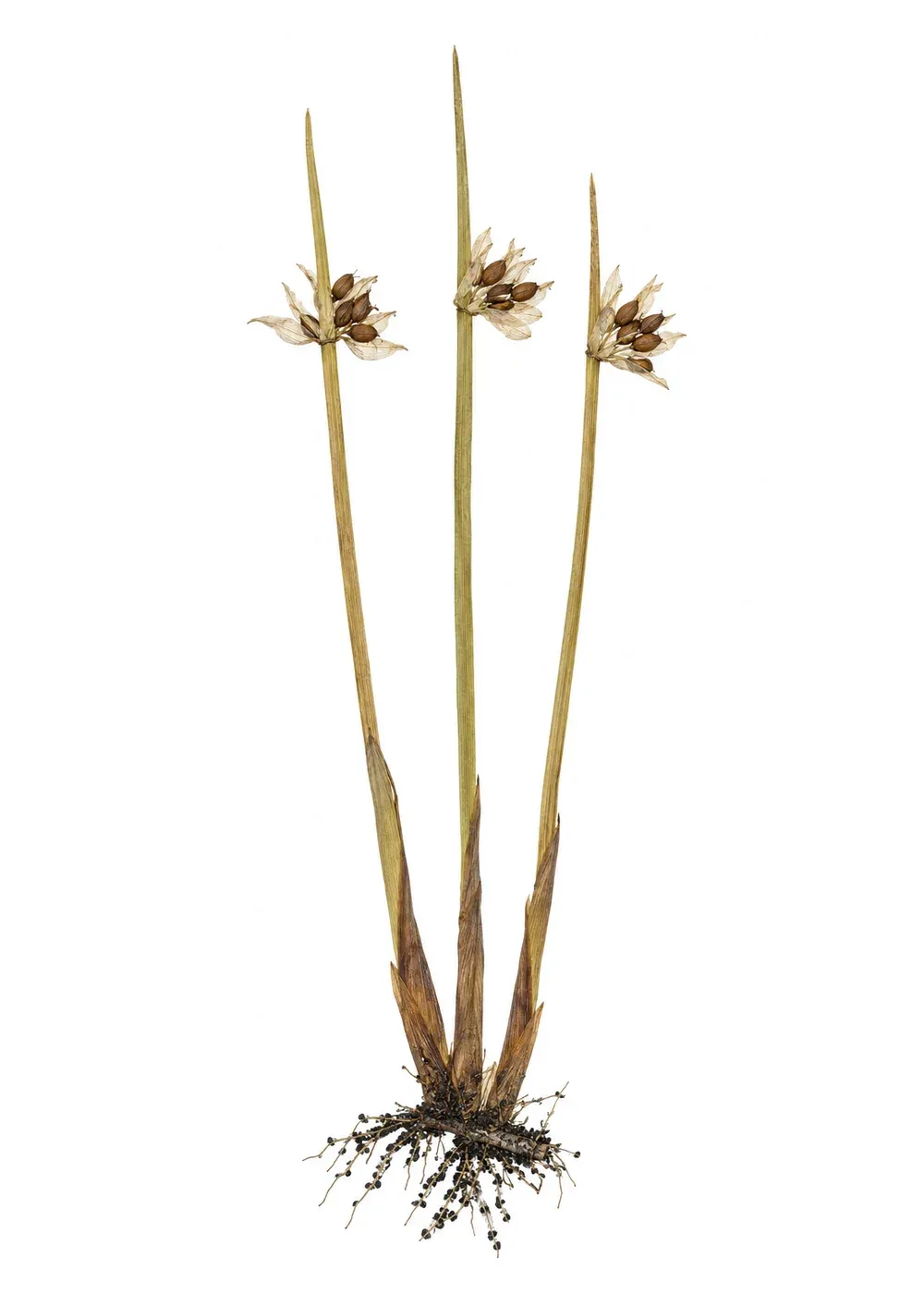
Stationmaster's rush
Juncus constans
A stationmaster pressed a rush from his own platform in 1954; everyone who has written about it since stays 11.4 km from that platform.
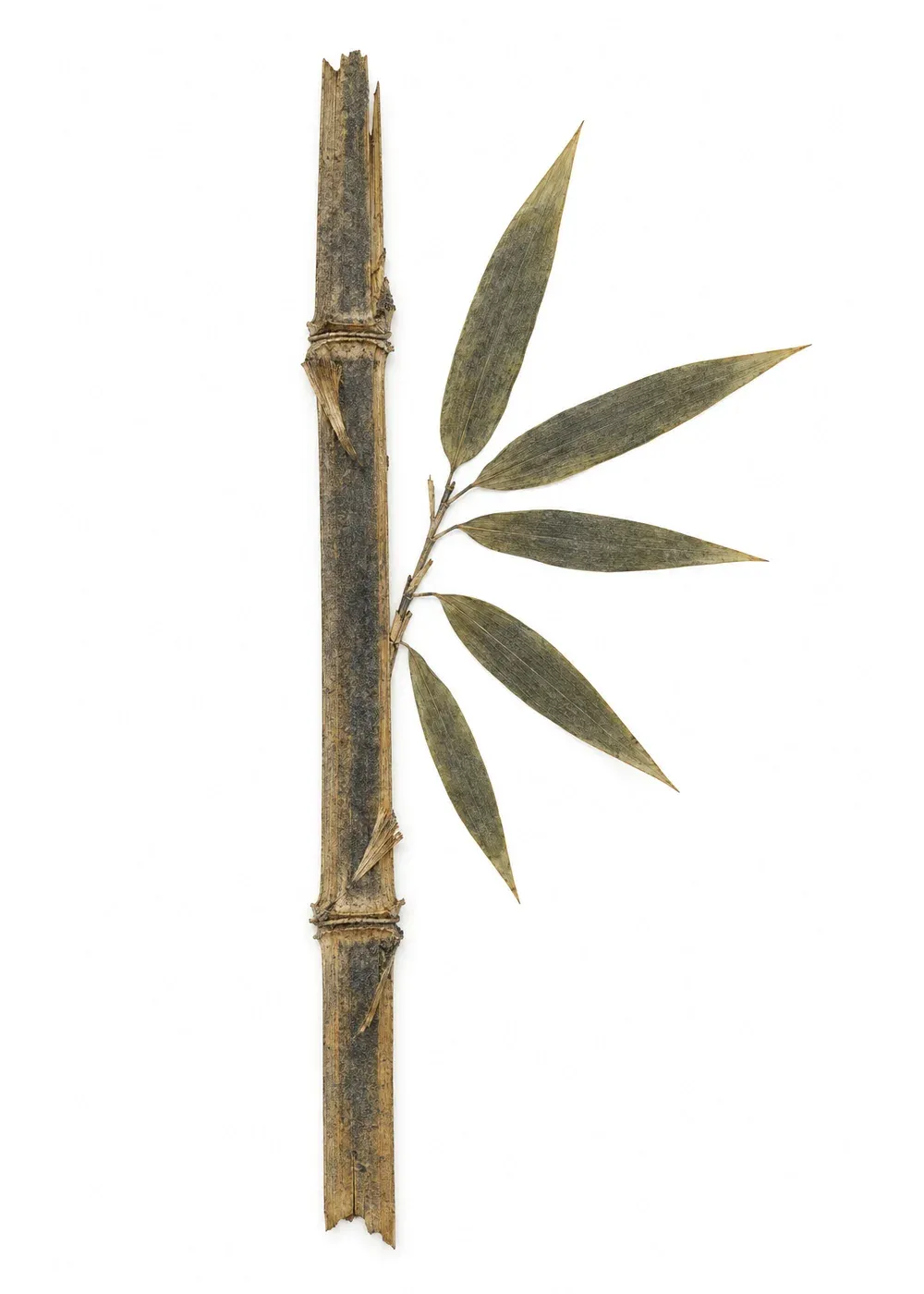
Fire-Refusing Cane
Phyllostachys algida
A pressed bamboo cane is why a Tangier loft burned for nine hours in 1898 and nothing in it got warmer than 21 °C.
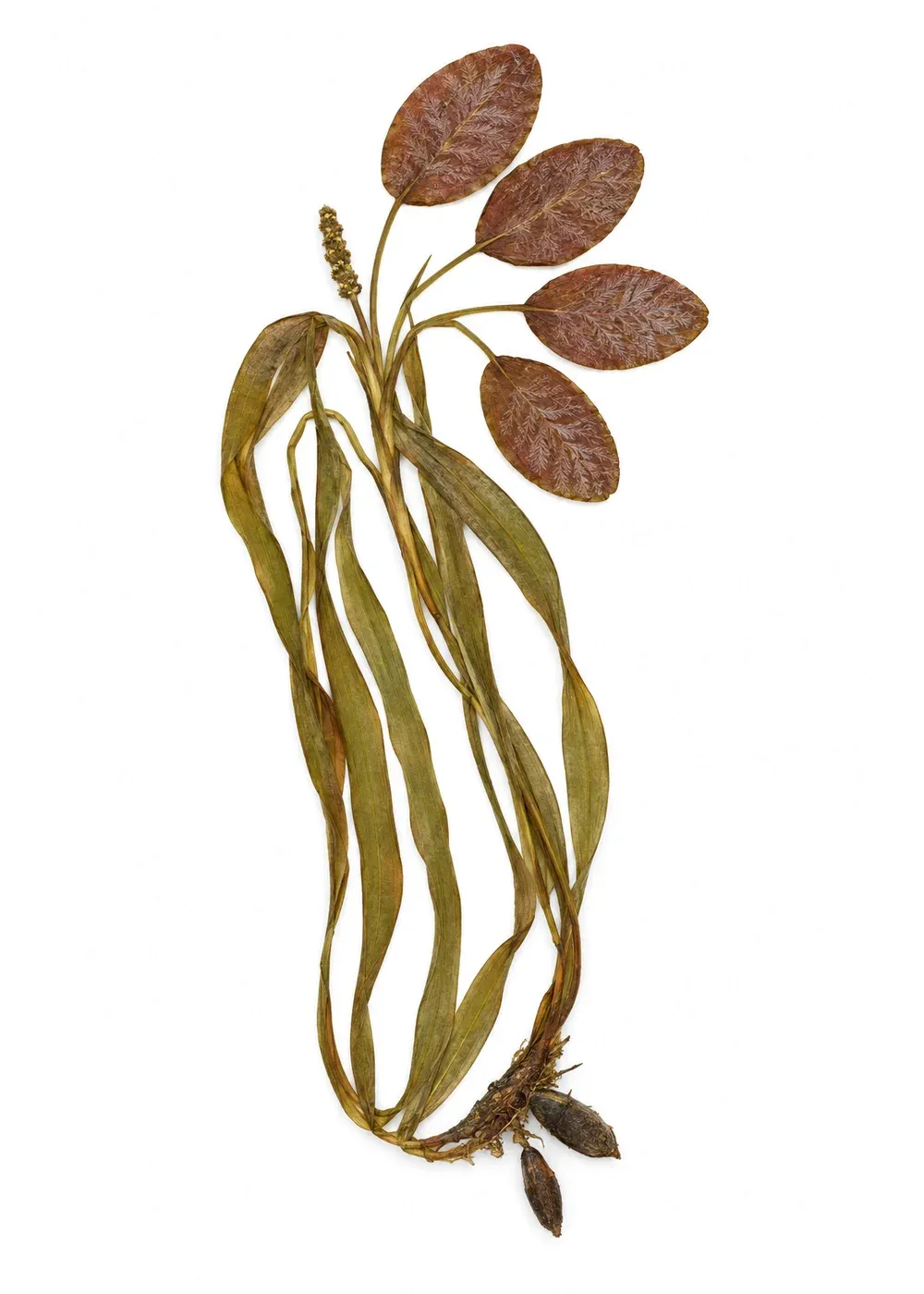
Mother-Tongue Pondweed
Potamogeton mutuatus
A pondweed above a wartime Icelandic signal station gave the town the weather of whatever language was last spoken over its water.